
02 Dec Why Friuli Venezia Giulia Is Italy’s Best Kept Secret – Clone
Why Friuli Venezia Giulia Is Italy’s Best Kept Secret
A Region of Remarkable Landscapes
Tucked away in the far north east of Italy, where the Alps ease into gentle plains and finally the Adriatic Sea, Friuli Venezia Giulia is one of the country’s most overlooked regions. Its landscapes are unusually varied. The foothills north of Sacile offer peaceful hilltowns, chestnut woods and turquoise lakes such as Barcis and Cavazzo. Higher up, the Julian Alps show a more alpine character, with wooden chalets, meadows and the beautiful ridgeline around Monte Lussari.
A short drive south takes you to a completely different setting of wide lagoons, sandy beaches and coastal towns shaped by centuries of Venetian influence.
History Written Across the Centuries
Friuli’s history stretches from ancient Rome to the medieval Longobards and through the eras of Venice and the Habsburg Empire. Aquileia was once one of the most important cities of the Roman world and today preserves a remarkable fourth-century mosaic floor, one of the most impressive in Europe.
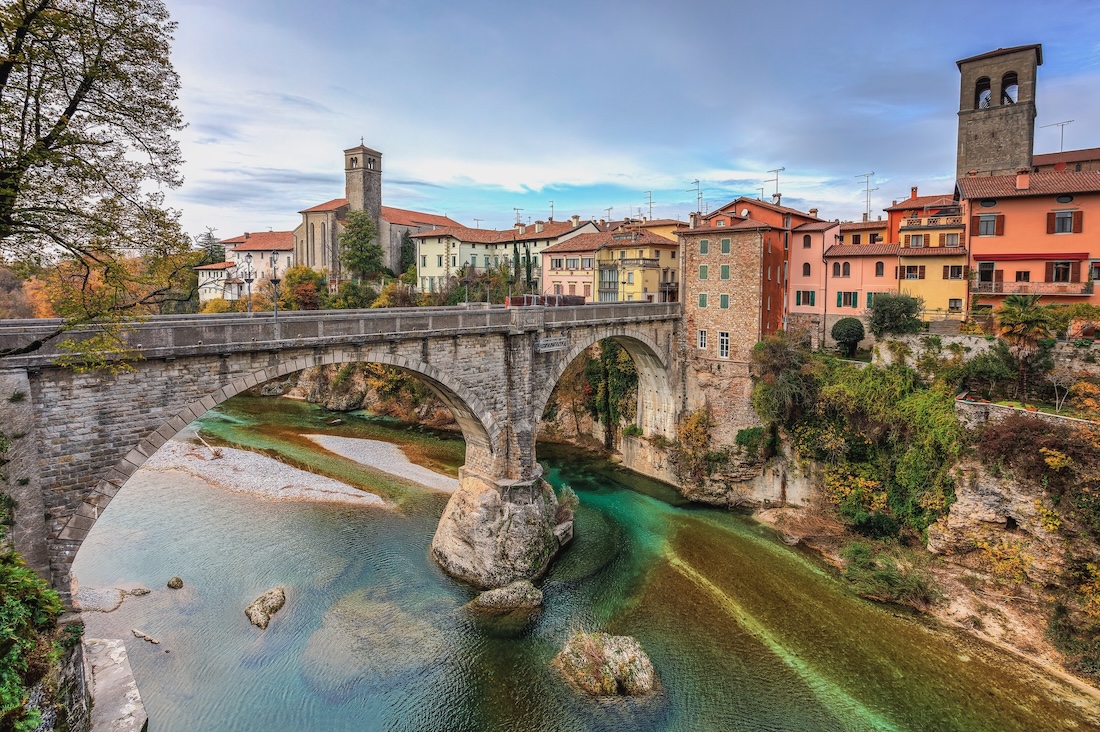
Cividale del Friuli, founded by Julius Caesar, later became the capital of the Longobard Duchy and is home to the Tempietto Longobardo, considered a masterpiece of early medieval architecture. Across the plains, towns such as Portogruaro and Sacile still show their Venetian heritage in arcaded streets and elegant waterside villas. Further east, Gorizia and Trieste reflect their long connection with the Habsburgs and have a distinctive Mitteleuropean feel.
A Food and Wine Culture Worth Travelling For
Food and wine are central to life in Friuli. The Collio hills produce some of Italy’s best cool-climate wines, including Friulano, Ribolla Gialla and the red Refosco. Vineyards sit in neat terraces, and tastings often feel more like relaxed conversations than formal appointments.
In the mountains, the Montasio Plateau is known for its DOP cheese, produced in small alpine dairies. Prosciutto di San Daniele, rustic soups, handmade pastas and fresh seafood from the coast round out a cuisine that is simple, seasonal and firmly tied to the region.
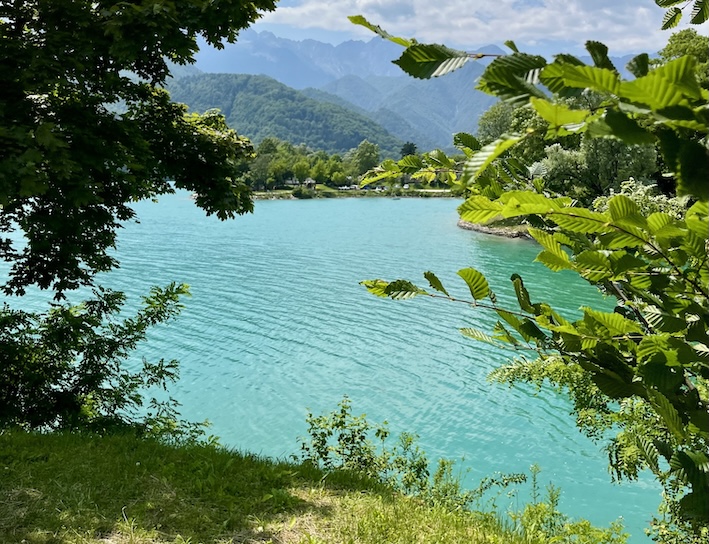
The turquoise waters of Lake Barcis in the foothills north of Sacile.
Authentic Italy at a Relaxed Pace
One of Friuli’s great attractions is its authenticity. This is a part of Italy where life moves at a quieter rhythm, well away from the major tourist routes. Mornings are spent in small piazzas, afternoons wandering medieval lanes or walking by the lakes, and evenings enjoying good local food and a glass of wine. It suits travellers who prefer smaller towns, gentle walks and meaningful cultural experiences rather than big crowds or hurried sightseeing.
The Ideal Time to Visit Friuli
September is one of the most appealing months to explore the region. Days are generally mild to warm, evenings are cool in the foothills, and the light is clear, ideal for sightseeing and spending time outdoors. Vineyards are in full harvest, the sea is still warm, and the mountains are especially inviting.
Explore Friuli with Us
If you’re drawn to a quieter, more authentic side of Italy, our new small-group tour of Friuli Venezia Giulia offers a relaxed way to experience its landscapes, history, food and culture. We’d be delighted to show you this remarkable region.
You can find all the details of our Friuli Venezia Giulia tour here