Italian Lakes Tag

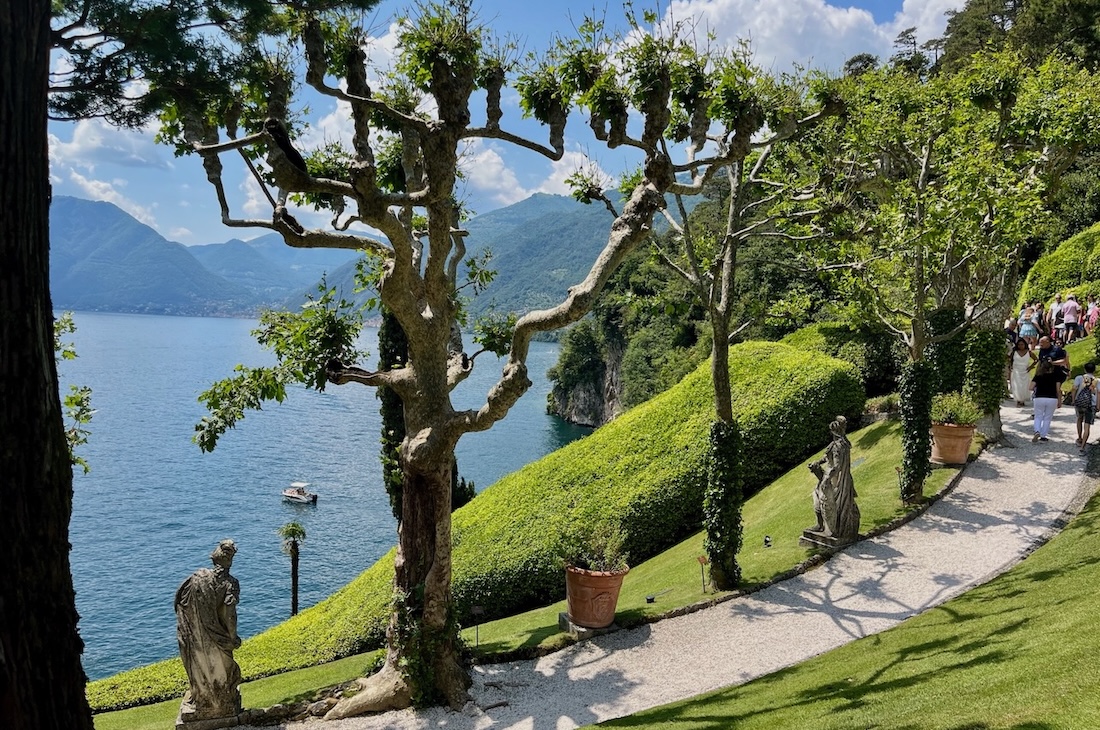
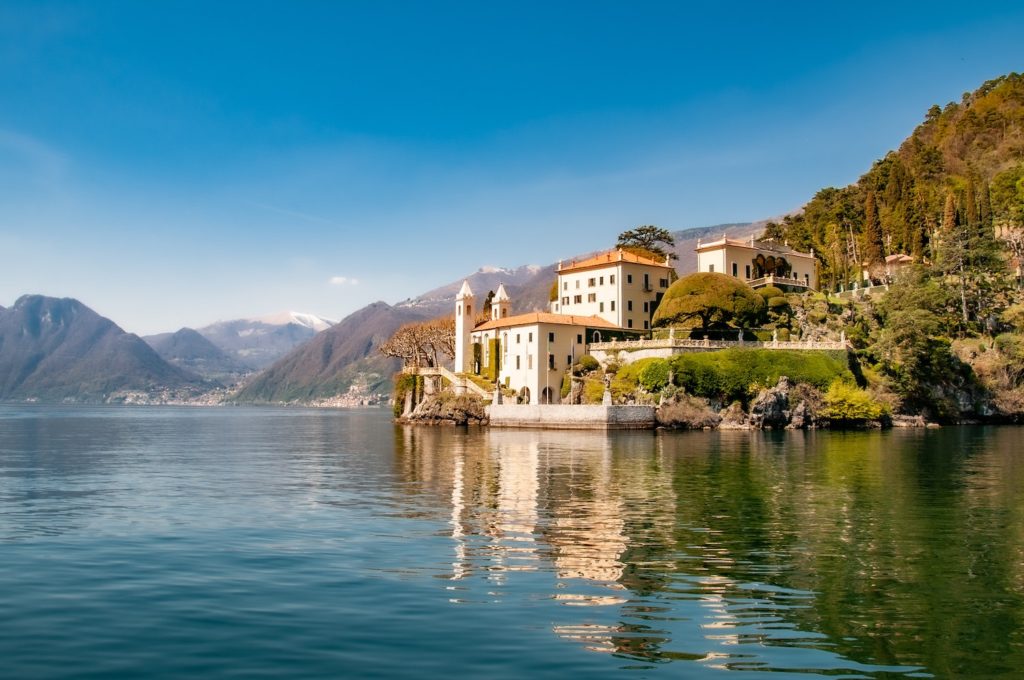
Scenic garden path with statues and trimmed trees at Villa del Balbianello on Lake Como, overlooking the lake and surrounding mountains.

12 Sep Lake Como or Lake Maggiore? Choosing Your Perfect Italian Lake Escape

Italy’s northern lakes have captivated travellers for centuries, each offering its own unique atmosphere and charm. Among them, Lake Como and Lake Maggiore stand out as two of the most beautiful and distinctive. Both are known for their scenery, history and local culture, but the atmosphere of each lake varies. If you’re wondering which one might suit your style of travel, here’s a comparison to help you decide, or perhaps to tempt you into visiting both.

Scenery and Landscape
Lake Como is framed by steep mountains that rise directly from the water, giving it a sheltered and dramatic feel. Small towns and villages, like Bellagio and Varenna, sit along the shore, with elegant villas and gardens often reached by boat. The lake has become very popular in recent years, so the quieter shoulder months of April, May, late September and October are the best time to visit.

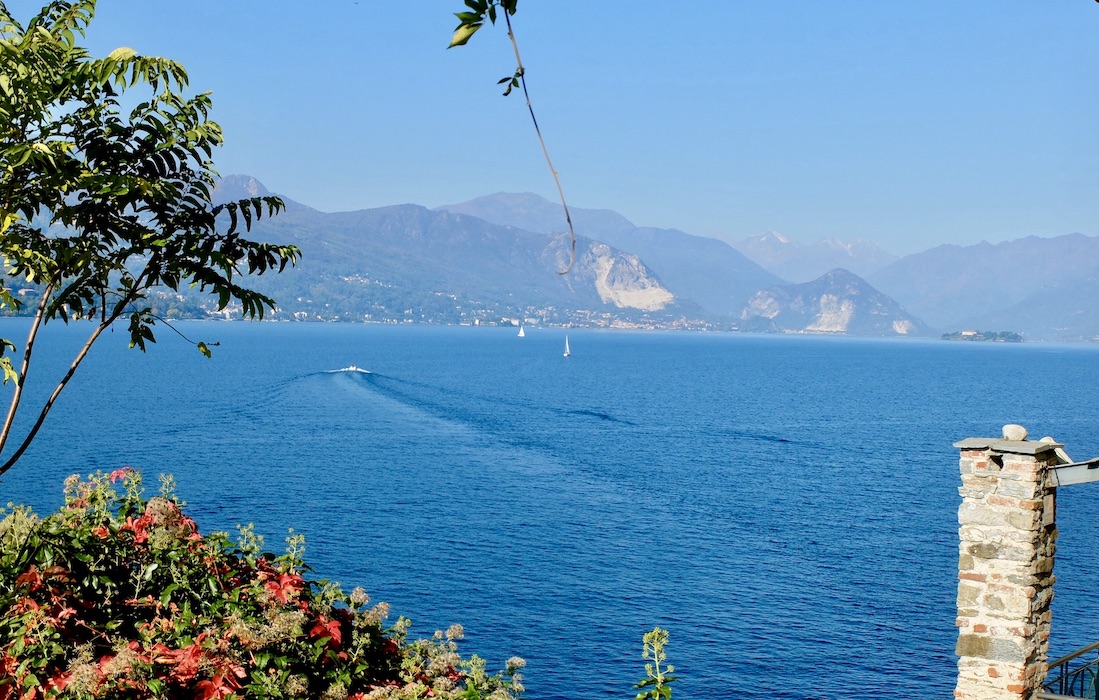
Lake Maggiore feels more open and expansive. It stretches into Switzerland, with views of rolling hills and the Alps beyond. A highlight of Lake Maggiore is the Borromean Islands, each offering its own character, from manicured gardens to historic palaces. The lake’s scale and variety of landscapes create a different atmosphere from Como, one that is spacious, diverse and generally less crowded.
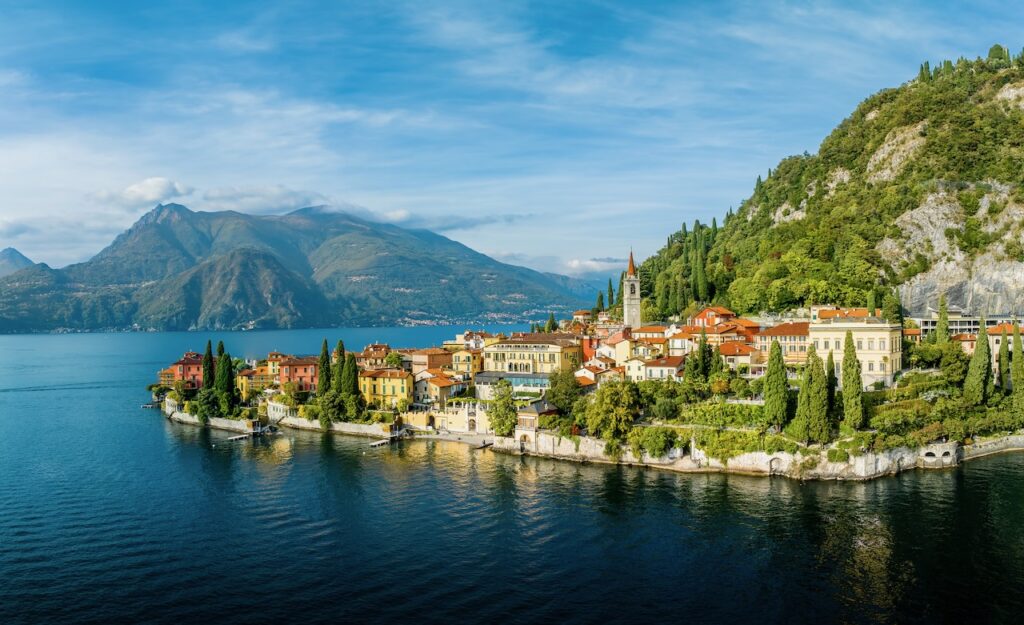
Colorful lakeside village of Varenna on Lake Como with mountains in the background.

The lakeside village of Varenna, framed by steep mountains and lake waters

Cultural & Historical Attractions
Lake Como is steeped in history, and much of it can be seen in its grand villas and gardens. Villa del Balbianello, perched on a wooded peninsula, is one of the most recognisable sights, and Villa Carlotta is famed for its botanical gardens and art collection. In the town of Como itself, the striking cathedral reflects centuries of aristocratic power and artistic patronage.

Lake Maggiore has an equally fascinating cultural offer. The Borromean Islands are at its heart. Isola Bella boasts a baroque palace and terraced gardens, Isola Madre features a lush botanical park, and Isola dei Pescatori offers a simple fishing-village charm. On the lake’s southern shore, the medieval Rocca di Angera towers above the water, a fortress rich with frescoes and history.

Activities & Outdoor Adventures
On Lake Como, time on the water is a highlight, with boat trips connecting villas and lakeside towns. The public ferry system is a perfect way to get around, or for a special treat, you might choose a private boat tour. For the more active, hiking trails in the surrounding mountains reward you with expansive views over the lake. Even a short climb can bring you to a vantage point that shows off the drama of Como’s landscape.

Lake Maggiore offers a different set of adventures. For panoramic views, the cable car from Stresa to Monte Mottarone takes you up to 1,500 metres, where the view stretches across the lakes and the Alps. Along the shore, gentle walks, gardens, and quieter towns invite a more relaxed style of exploration.
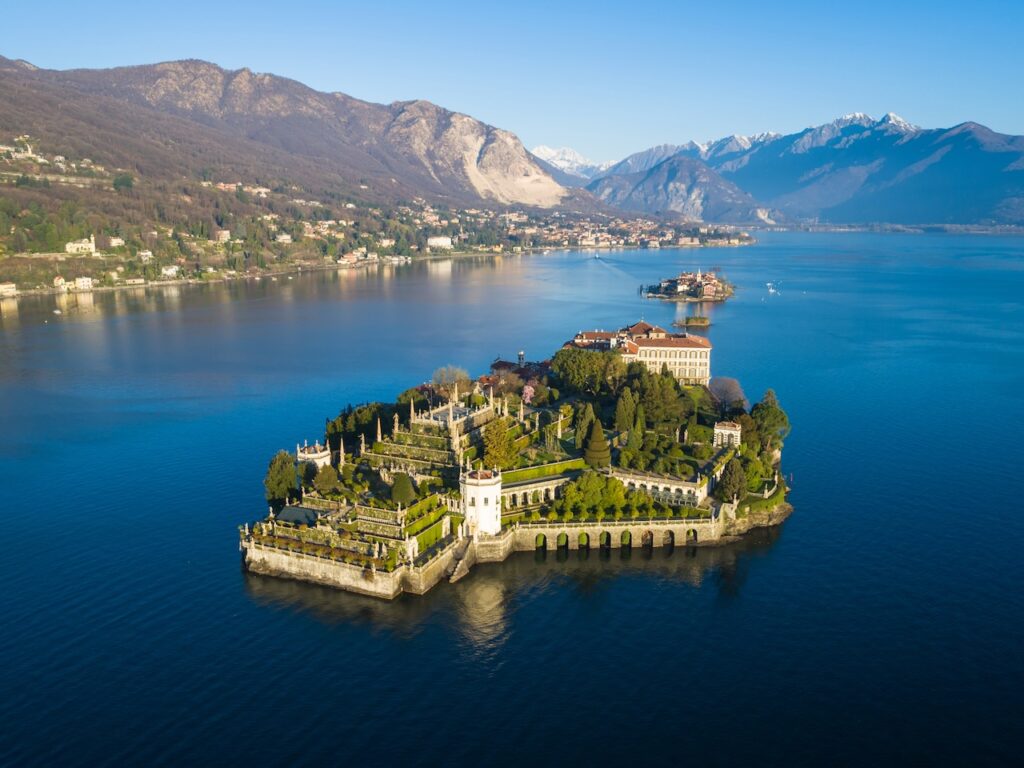
Aerial view of Isola Bella on Lake Maggiore with palace and terraced gardens.

The ornate gardens of Isola Bella, one of Lake Maggiore’s most famous islands

Where to Stay: Towns & Accommodation
On Lake Como, Bellagio, Varenna, and Menaggio are the classic bases, with elegant hotels and sweeping views. For a quieter stay, consider looking further north or at small hotels or a villa outside the main towns, especially if you have a car.

On Lake Maggiore, Stresa is the main base for visitors, convenient for the Borromean Islands but often very busy. For a quieter stay with just as much charm, Pallanza is an excellent alternative. Further north, Cannero Riviera and Cannobio are peaceful, relaxed towns that offer a slower pace, lakeside promenades, and a more local feel.

Which One Is Right for You?
Lake Como is suited to travellers who enjoy romantic settings, historic villas and dramatic scenery. It is best experienced outside the peak summer months.

Lake Maggiore is a good choice for those who prefer a more open landscape, cultural variety and a slower pace. Island visits and alpine views add to its appeal.

The truth is, both lakes offer something special. If choosing between them feels impossible, you don’t have to. They are located quite close to each other, so with a week or ten days, you could easily split your time between the two. Our Italian Lakes Discovery tour does precisely this, with stays on both Lake Maggiore and Lake Como, so you can experience their contrasts side by side.
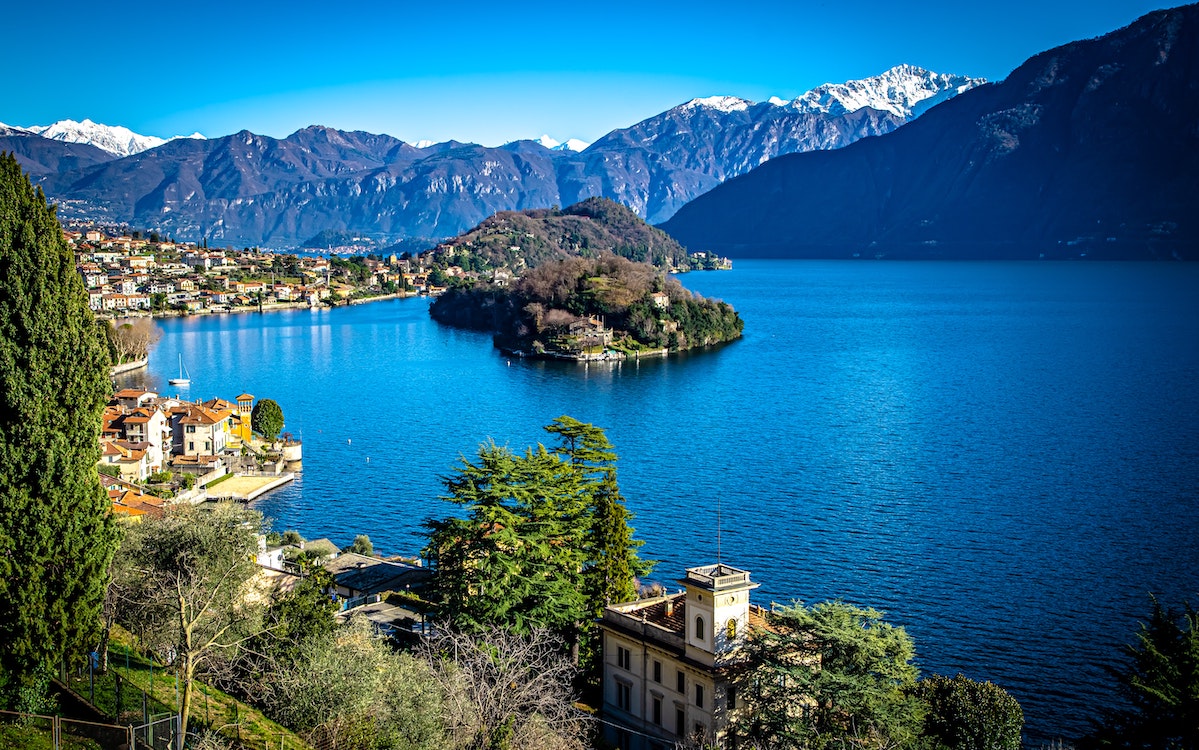
Click here for our 2026 Italian Lakes Discovery Tours!

Read More
Lake Como Scenery

01 Jun FIVE INTERESTING FACTS ABOUT LAKE COMO

Lake Como is rightly one of the most popular summer destinations in northern Italy and lots of people know the lake for its beautiful scenery and elegant villas. But there is more to Lake Como than meets the eye.

1. Lake Como is one of the deepest lakes in Italy. 

It’s the depth that gives the waters their vivid blue colour that makes for such spectacular vistas! At its deepest points, the waters of Lake Como are more than 425 metres deep. Australia’s deepest lake, by comparison, is Lake St Clair in Tasmania, which is about 200 metres deep.

I’m also guessing that’s why the waters of Lake Como are so cold!

2. The town of Como was an important centre in Roman times. 

The Romans built the Via Regina along the lake’s western shore. This placed Como in a vital position on the major trading route between the Po valley on the Italian peninsula and the Rhine Valley in what is now Switzerland. The lake’s popularity as a summer resort also started in Roman times, with wealthy Romans recognizing the beauty of the area and beginning to build villas on the lakeshore.

3. Lake Como supposedly has its very own lake monster, Lario! 

The first reported “sighting” was in 1946 when a large reptile-like creature was spotted swimming in the lake. It was named Lariosauro, after the prehistoric reptile whose fossilized remains were found near Lake Como (Lariosaurus balsami). 

There have only been a handful of sightings over the years, so it must be very shy!

Main image (above) by Bruce Meier on Unsplash

Photo by Lewis J Goetz on Unsplash

4. Lake Como is the capital of Italy’s silk production.

No one knows precisely how silkworms first came to Italy, but one fascinating account has two priests smuggling them out of China in the 6th Century!
It wasn’t until the 15th Century that silk production in the Como area really commenced. Ludovico Sforza, the Duke of Milan, ordered the planting of mulberry trees on the shores of Lake Como. This led to the dramatic expansion of the silk industry, as fascinatingly, silkworms can eat anything but will only produce silk when they are eating mulberry leaves.
The establishment of a prestigious school for silk artisans in the 19th Century cemented Como’s industry dominance. The school still operates today and trains some of the world’s most talented silk masters.

5. Como played a role in closing a dark chapter in Italy’s history. 

In 1945, Italian partisan forces captured a party of retreating fascist officials who were fleeing north towards Switzerland. Amongst them were Mussolini and his lover Petacci. They were summarily tried and executed on the shores of the lake at Giulino di Mezzegra, thus ending a sad chapter in Italian history.
When we stayed in Lenno in 2013 after our wedding, we were walking in the hills behind Lenno and stumbled across the site, commemorated by a small plaque on the gate of a private house. It was pretty chilling.

Are you planning a trip to Lake Como? 

We can help with recommendations for hotels, restaurants and things to do, even where to buy Como’s famous silk. Just get in touch, and we can put together a custom itinerary for you.
If you’d like to join one of the tours that visit Lake Como, it’s not too late to join our Milan and the Lakes tour in 2022 or start planning for one of our 2023 tours.

Read More
View over Lake Maggiore

13 Nov THE MANY FACES OF LAKE MAGGIORE

Secluded gardens, a magnificent waterfall, a monastery built into the cliff face –  Lake Maggiore offers a lot more than the average day-tripper from Milan can see.

All the Italian lakes have beautiful private gardens on their shores. But just outside the town of Intra is a little known garden with links to Australian history. The Botanical Gardens of Villa Taranto were established by Captain Neil Boyd McEacharn, the son of a former Mayor of Melbourne, Sir Malcom Donald McEacharn and Maryanne Watson, daughter of Australian mining millionaire John Boyd Watson. A passionate Italophile, McEacharn spent the decade between 1931 and 1940 establishing this garden at his lakeside villa. Visitors wandering the garden’s seven kilometres of paths can enjoy 20000 plant varieties, and 300 different types of McEacharn’s greatest passion, his dahlias. 

Not only are there secluded gardens around the lake, but following the Toce River up the Val Formazza to its source, one finds oneself in an area populated by a group of Italians  whose elders still speak a dialect similar to High German, the language of the original settlers. At the top of the valley is the Cascata del Toce, the second largest waterfall in Europe. This waterfall is one of the most spectacular in the Alps, with a stunning freefall jet of water cascading to the rocks below.

Monastery on Lake Maggiore

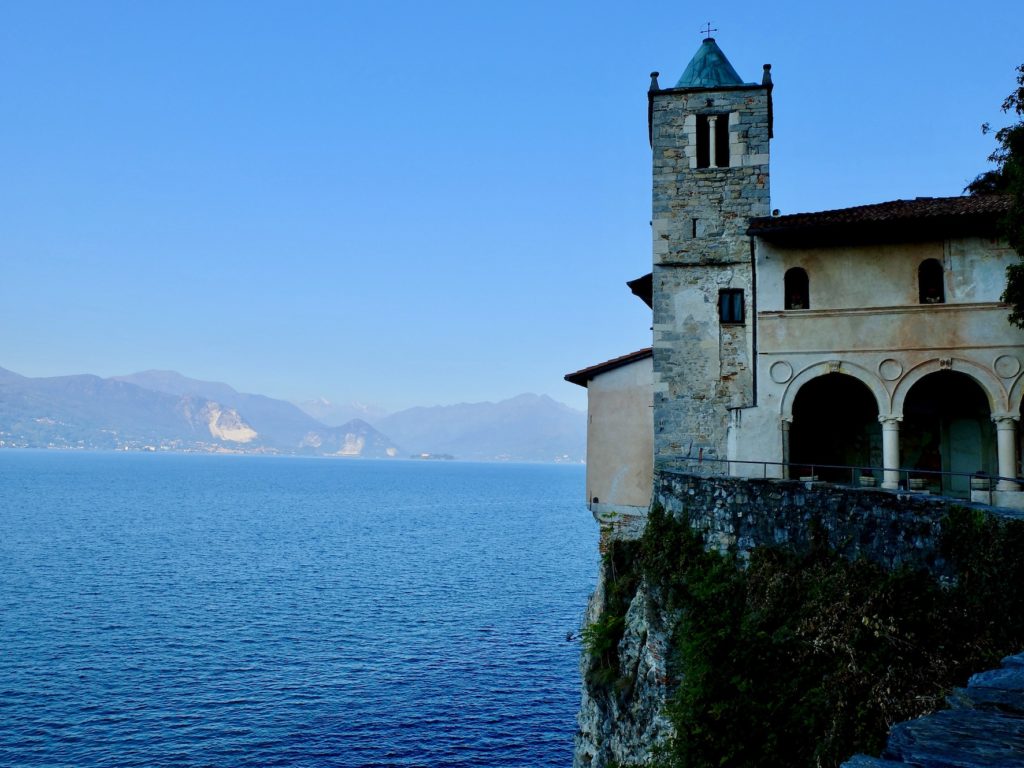
Perched on a rocky ridge on the eastern shore of Lake Maggiore is the Hermitage of Santa Caterina del Sasso. Since the 1300s the monastery has been inhabited by members of the Dominican order but is today inhabited by a group of Benedictine oblates. Visitors must maintain silence but are welcome to walk the lovely balconies that overlook the lake and take in the very special atmosphere of the place.

There are other more famous tourist destinations on the lake, most notably the Borromean Islands, Isola Bella, Isola Madre and Isola dei Pescatori, with their justly famous gardens, buildings and vistas. From the Renaissance period they have all been owned and inhabited by members of the Borromean family. The most spectacular of these is Isola Bella, built in 1632 as a wedding present by Charles III for his wife Isabella, and containing Baroque gardens, grottoes and even white peacocks.

We stay on Lake Maggiore as part of our 14-day Milan and the Best of the Italian Lakes tour in May-June 2020 and on our 8-day Lakes Discovery tour in September 2020.

Read More
Italian lakes tour to Lago d'Orta

27 Feb A POSTCARD FROM LAGO D’ORTA

The Lago d’Orta or Lake Orta is one of the relatively undiscovered gems of the Italian Lakes district, a smaller lake, not too distant from Lake Maggiore. It is quaint and extremely picturesque especially on its southern side.

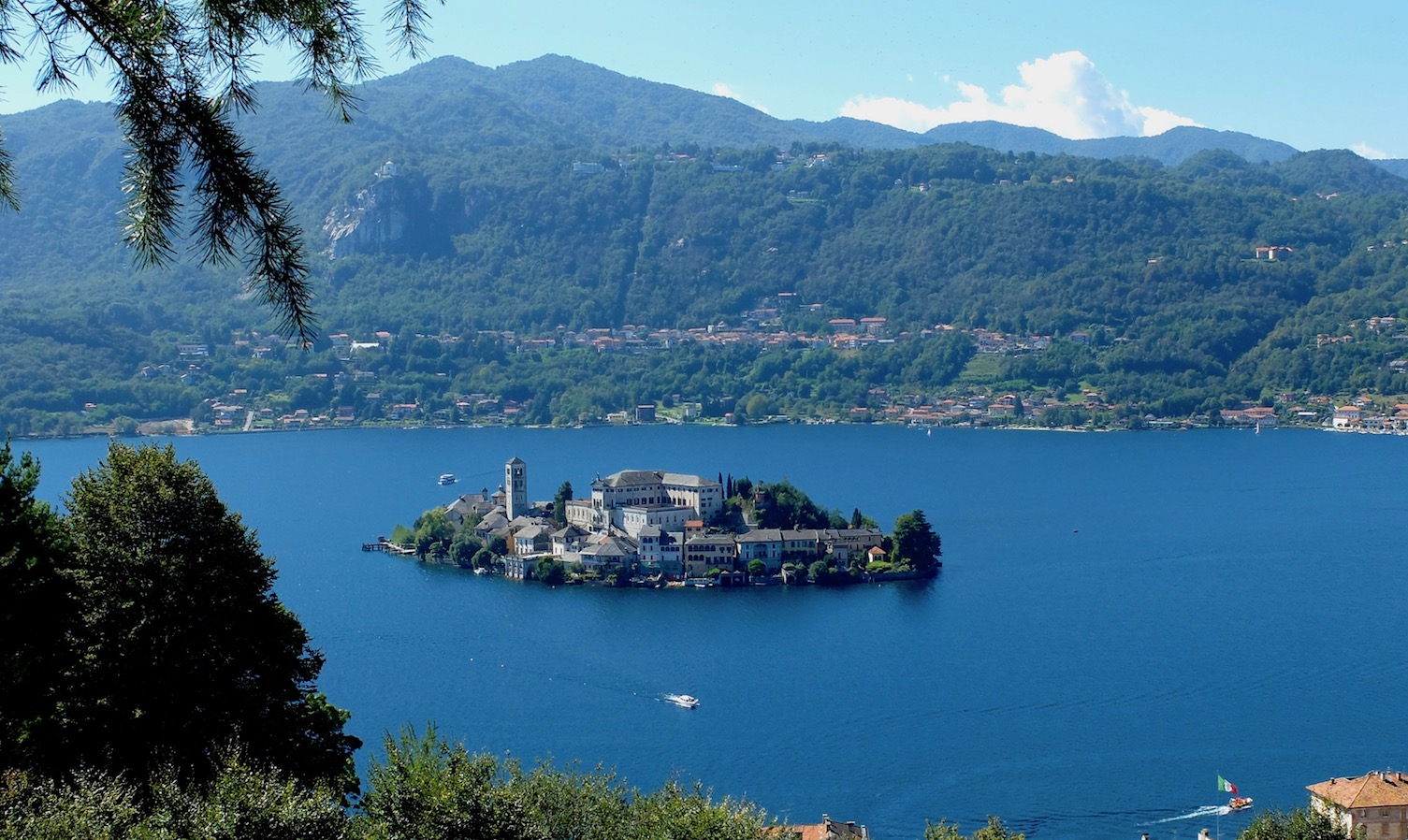
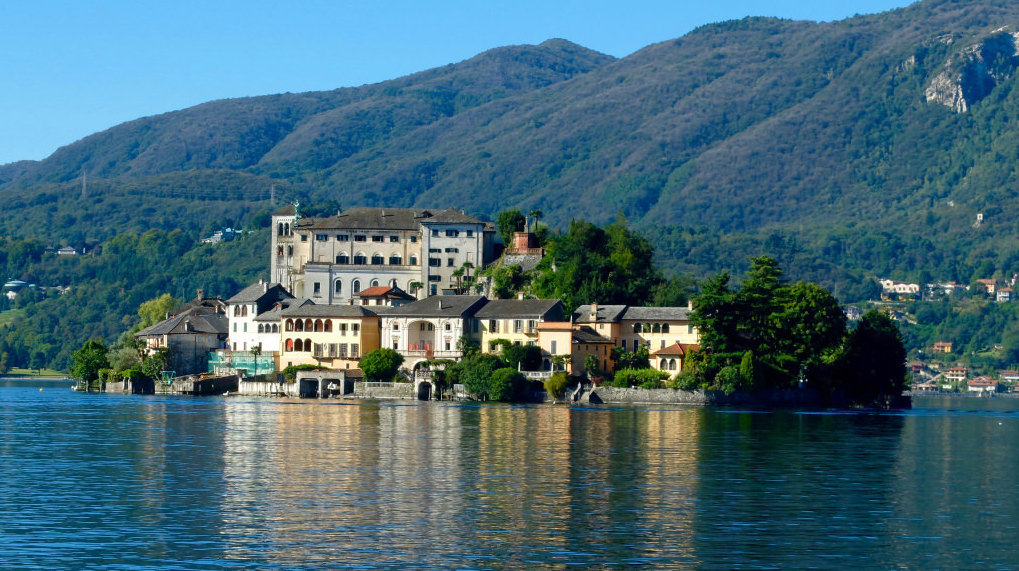
The small town of Orta San Giulio is undoubtedly the pearl of the lake. The town spills down the hillside to the lake shore, overlooking the water and the romantic island of San Guilio below. Visitors can while away lazy afternoons exploring the narrow streets with their quaint houses and baroque palaces, sipping coffee in the piazza on the water’s edge in front of the Island of San Giulio or wandering along the lakeshore.

The island of San Giulio reputedly has mystical properties. It is no wonder therefore that it was the site of an early Christian community fighting against paganism in the area. The first known structure dates to the end of the 300s. Legend has it that the proselytising Saint Giulio defeated a dragon on the Island and then built the first basilica with the help of wolves. On that site today stands the 11th century Basilica of Saint Giulio, one of the most significant examples of Romanesque architecture in Piedmont, and seminary, now a Benedictine monastery, which towers over the rest of the island. The Basilica is an impressive, solid structure. It has some interesting frescoes, some from the 1350s, others from the early 1500s. Its most impressive possession, though, is the 12th century pulpit in black marble. The Romanesque bas-reliefs are exquisite, one portraying either William of Volpiano or Saint Giulio. William of Volpiano was a Benedictine reformer, born on the island and renowned for being the architect of the Abbeys of Mont Saint-Michel, of Saint-Germain-des-Prés in Paris and of Fécamp in Normandy.

A ferry service takes visitors out to the island where they can explore the churches and enjoy the peace and atmosphere of this enchanting place.

If you’re feeling energetic, take a walk up the hill behind Orta San Giulio to the Sacro Monte di Orta, a devotional complex of 20 chapels built between the 16th and 18th Centuries. The chapels are interesting, but the views out over the Lago d’Orta and the Isola San Giulio are breathtaking.

Best of the Italian Lakes tour

SOME PRACTICALITIES 

Visit Lago d’Orta with Italian Tours:
Lago d’Orta is featured in two of our itineraries in 2018:
Milan and the Lakes tour (31 May -13 June 2018)
Tastes of Piedmont and Valle d’Aosta tour (3 – 16 October 2018)

Or you can visit  Lago d’Orta on your own with these tips:
How to get there:
It’s not easy to get to Lago d’Orta with public transport, so your best option is to travel with your own car. The town of Orta San Giulio is about an hour and half from Milan or 30 minutes from Stresa on Lake Maggiore.

Where to stay:
The Hotel San Rocco is our pick of the hotels located on Orta San Giulio. Set on the lakeshore, all the superior rooms have wonderful lake views and the hotel terrace is a wonderful spot to enjoy an aperitivo or light dinner.

Where to eat:
Located in the centre of Orta San Giulio, Ristorante Venus has a wonderful terrace overlooking the lake.

Read More