Travel Tips

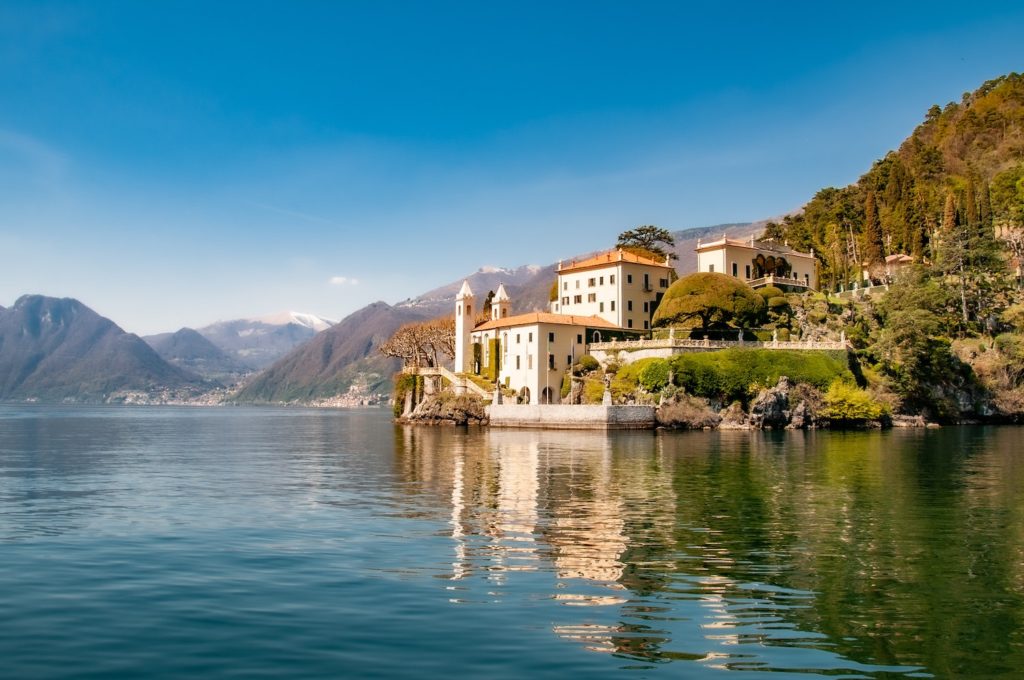
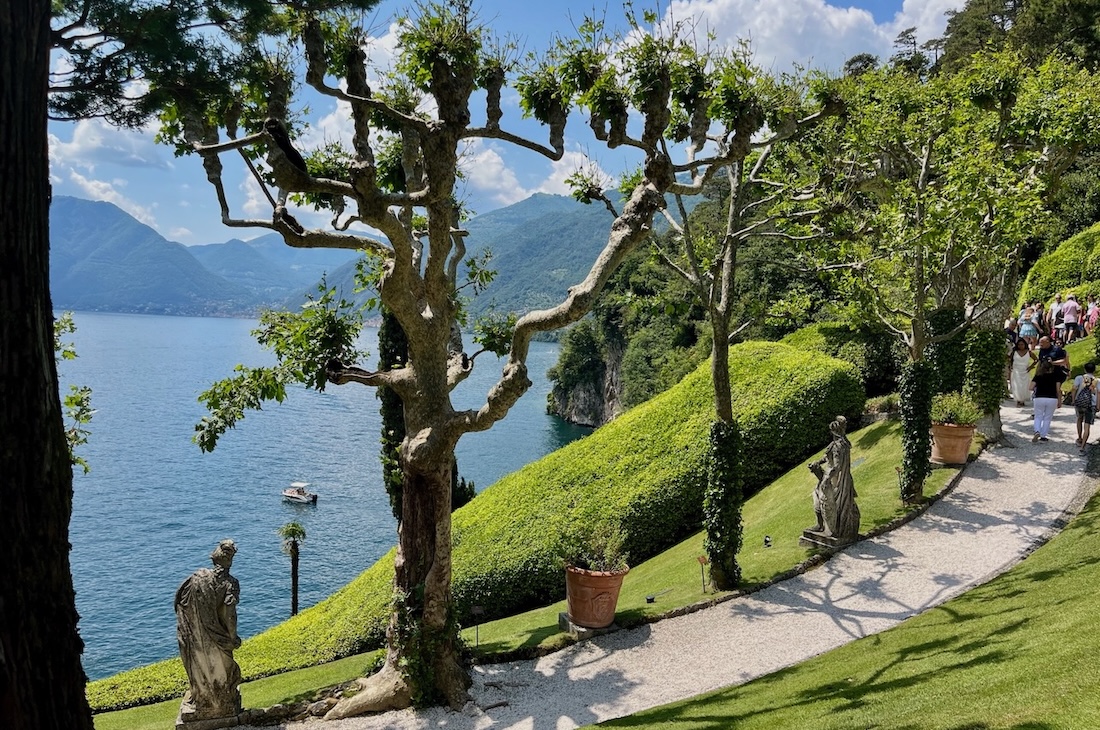
Scenic garden path with statues and trimmed trees at Villa del Balbianello on Lake Como, overlooking the lake and surrounding mountains.

12 Sep Lake Como or Lake Maggiore? Choosing Your Perfect Italian Lake Escape

Italy’s northern lakes have captivated travellers for centuries, each offering its own unique atmosphere and charm. Among them, Lake Como and Lake Maggiore stand out as two of the most beautiful and distinctive. Both are known for their scenery, history and local culture, but the atmosphere of each lake varies. If you’re wondering which one might suit your style of travel, here’s a comparison to help you decide, or perhaps to tempt you into visiting both.

Scenery and Landscape
Lake Como is framed by steep mountains that rise directly from the water, giving it a sheltered and dramatic feel. Small towns and villages, like Bellagio and Varenna, sit along the shore, with elegant villas and gardens often reached by boat. The lake has become very popular in recent years, so the quieter shoulder months of April, May, late September and October are the best time to visit.

Lake Maggiore feels more open and expansive. It stretches into Switzerland, with views of rolling hills and the Alps beyond. A highlight of Lake Maggiore is the Borromean Islands, each offering its own character, from manicured gardens to historic palaces. The lake’s scale and variety of landscapes create a different atmosphere from Como, one that is spacious, diverse and generally less crowded.
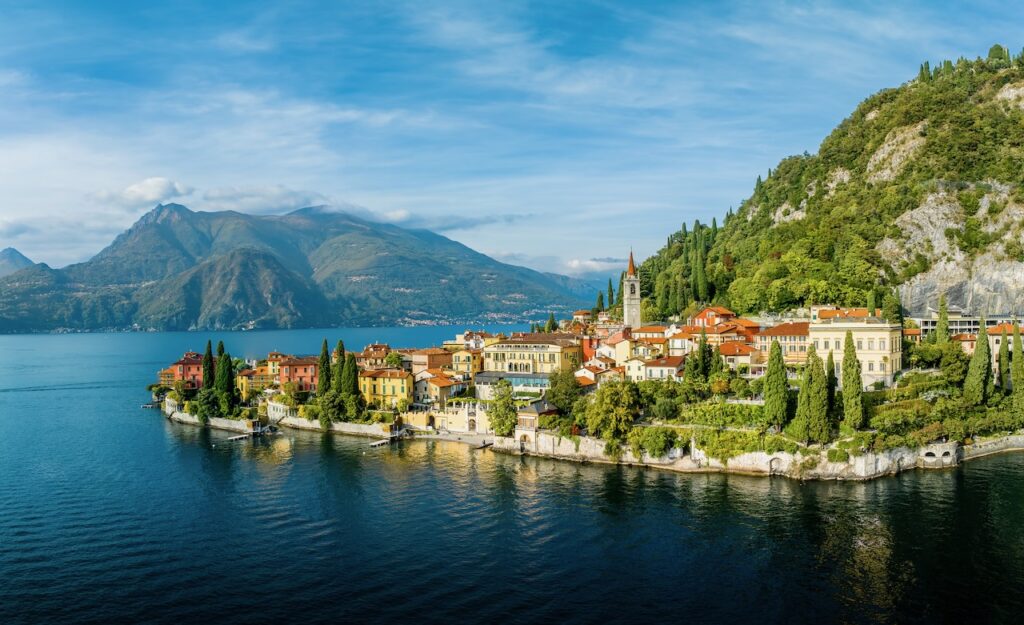
Colorful lakeside village of Varenna on Lake Como with mountains in the background.

The lakeside village of Varenna, framed by steep mountains and lake waters

Cultural & Historical Attractions
Lake Como is steeped in history, and much of it can be seen in its grand villas and gardens. Villa del Balbianello, perched on a wooded peninsula, is one of the most recognisable sights, and Villa Carlotta is famed for its botanical gardens and art collection. In the town of Como itself, the striking cathedral reflects centuries of aristocratic power and artistic patronage.

Lake Maggiore has an equally fascinating cultural offer. The Borromean Islands are at its heart. Isola Bella boasts a baroque palace and terraced gardens, Isola Madre features a lush botanical park, and Isola dei Pescatori offers a simple fishing-village charm. On the lake’s southern shore, the medieval Rocca di Angera towers above the water, a fortress rich with frescoes and history.

Activities & Outdoor Adventures
On Lake Como, time on the water is a highlight, with boat trips connecting villas and lakeside towns. The public ferry system is a perfect way to get around, or for a special treat, you might choose a private boat tour. For the more active, hiking trails in the surrounding mountains reward you with expansive views over the lake. Even a short climb can bring you to a vantage point that shows off the drama of Como’s landscape.

Lake Maggiore offers a different set of adventures. For panoramic views, the cable car from Stresa to Monte Mottarone takes you up to 1,500 metres, where the view stretches across the lakes and the Alps. Along the shore, gentle walks, gardens, and quieter towns invite a more relaxed style of exploration.
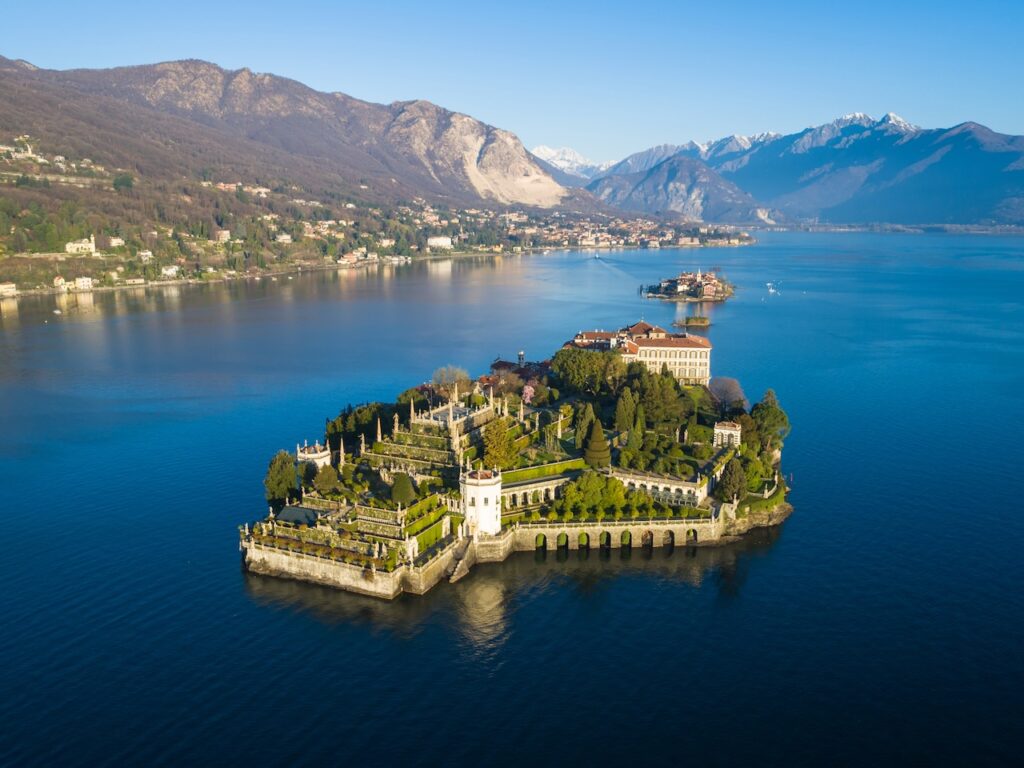
Aerial view of Isola Bella on Lake Maggiore with palace and terraced gardens.

The ornate gardens of Isola Bella, one of Lake Maggiore’s most famous islands

Where to Stay: Towns & Accommodation
On Lake Como, Bellagio, Varenna, and Menaggio are the classic bases, with elegant hotels and sweeping views. For a quieter stay, consider looking further north or at small hotels or a villa outside the main towns, especially if you have a car.

On Lake Maggiore, Stresa is the main base for visitors, convenient for the Borromean Islands but often very busy. For a quieter stay with just as much charm, Pallanza is an excellent alternative. Further north, Cannero Riviera and Cannobio are peaceful, relaxed towns that offer a slower pace, lakeside promenades, and a more local feel.

Which One Is Right for You?
Lake Como is suited to travellers who enjoy romantic settings, historic villas and dramatic scenery. It is best experienced outside the peak summer months.

Lake Maggiore is a good choice for those who prefer a more open landscape, cultural variety and a slower pace. Island visits and alpine views add to its appeal.

The truth is, both lakes offer something special. If choosing between them feels impossible, you don’t have to. They are located quite close to each other, so with a week or ten days, you could easily split your time between the two. Our Italian Lakes Discovery tour does precisely this, with stays on both Lake Maggiore and Lake Como, so you can experience their contrasts side by side.
Click here for our 2026 Italian Lakes Discovery Tours!

Read More

24 Aug From Tree to Table: The Ancient Olive Groves of Puglia

In Puglia, olive oil isn’t just something you cook with — it’s part of the landscape. Drive almost anywhere in this southern region of Italy and you’ll see them: rows of silvery-green trees stretching to the horizon, their twisted trunks shaped by centuries of wind and sun. Some stand in neat commercial groves, others in small family plots, and a few are so ancient they have seen empires come and go.

For the Pugliese, olive oil is more than a product. It flavours their meals, anchors their traditions, and, in many cases, provides a small but steady income. Spend a little time here and it quickly becomes clear: the olive tree is as much a part of Puglia’s identity as its whitewashed towns and its sunny Adriatic coast.

The Roots of a Tradition
Puglia’s relationship with the olive tree goes back thousands of years. The Greeks and later the Romans cultivated olives here, spreading groves across the region and turning olive oil into one of the Mediterranean’s most valuable commodities. It was used not only in kitchens but also for lighting lamps, making soaps, and in religious rituals.

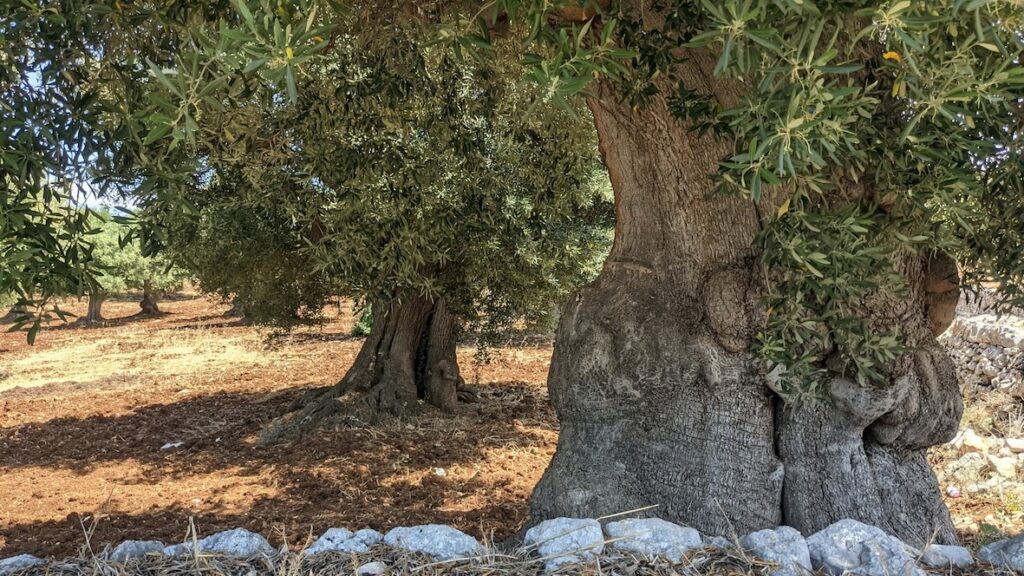
Some of those early groves survive to this day. Many of the region’s trees are over a thousand years old, their thick, gnarled trunks twisting and splitting into sculptural forms shaped by weather and regrowth. A few are so large that it takes several people holding hands to circle their base. Walking among them is like stepping into living history.

Today, Puglia is Italy’s largest olive oil producer, responsible for around 40% of the national output. What makes it special, though, is that production is still rooted in countless small growers, each tending their own patch of land.

The Land and Its Oil
The quality of Puglia’s olive oil begins with its environment. Long, hot summers and mild winters make for ideal growing conditions. The limestone-rich soil drains quickly, forcing roots to dig deep and strengthening the trees. The salty breezes from the Adriatic and Ionian seas add their own subtle influence.

Two of the most important local varieties are Ogliarola and Coratina. Ogliarola produces a mild, fruity oil with a touch of sweetness, perfect with fish, vegetables, and salads. Coratina is the opposite: bold, peppery, and lingering, a robust oil that shines drizzled over hearty dishes or fresh bread. Many producers blend these and other varieties to balance flavour and complexity.

For visitors, tasting oil fresh from the press is often a revelation. A good extra virgin olive oil has a brightness and depth that supermarket bottles rarely capture. Depending on the harvest, you might taste grassy notes, hints of tomato leaf, or that distinctive peppery kick known as the “Puglian tickle.” When you taste it here, surrounded by the groves themselves, it’s easy to understand why olive oil has been central to life in this region for millennia.

Ancient Meets Modern
Harvest season, from late October to December, remains one of the most critical times of year. Families and friends gather in the groves, spreading nets beneath the trees and gently combing olives from the branches with small rakes. It is hard work, but it still carries the sense of tradition and community that has always surrounded the olive harvest.

Pressing methods have changed more dramatically. In the past, olives were crushed with heavy stone wheels, and many old presses still survive as reminders of that history. Today, most producers use modern stainless-steel machinery, where cold pressing at controlled temperatures helps preserve flavour and quality.

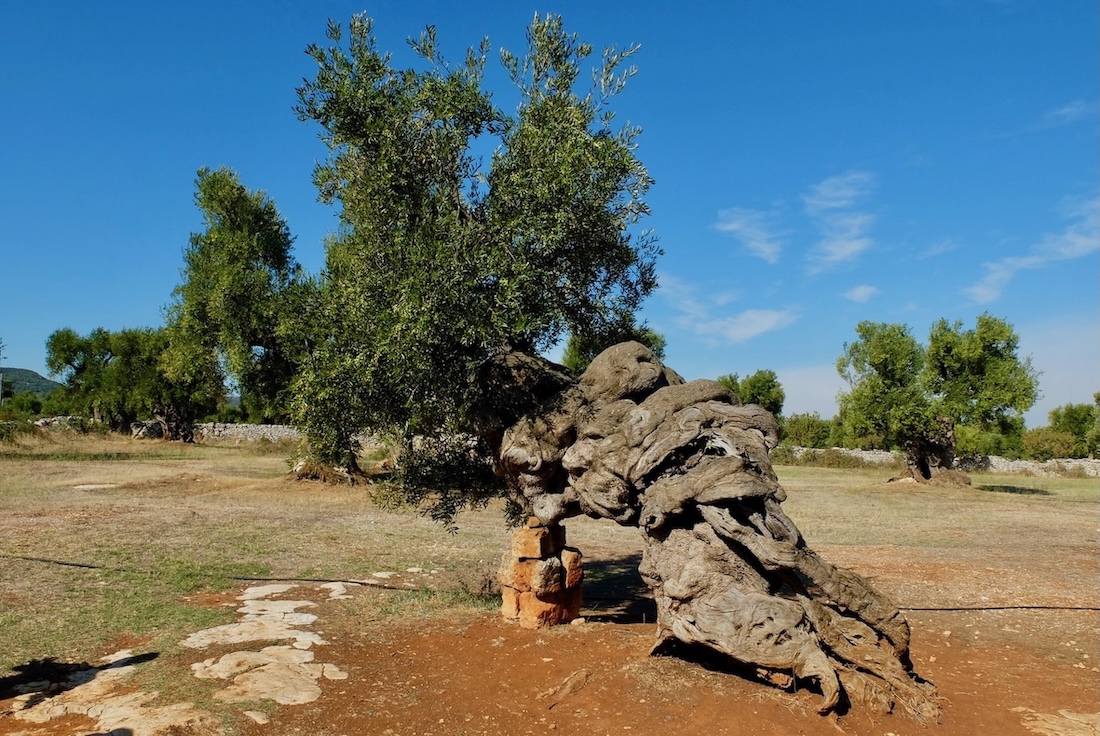
One of the best places to see this blend of old and new is at Masseria Brancati, just outside Ostuni. This family-run farm has been producing olive oil for generations. It even contains archaeological remains from Roman times, including an underground press carved from the rock. Some of its monumental olive trees, carbon-dated at more than 3,000 years old, still produce fruit today. Standing among them, you can’t help but feel a sense of continuity — these same trees were yielding olives when the Roman Empire was at its height.

The family now manages the estate with a mix of traditional knowledge and modern organic practices, producing award-winning oils while safeguarding their historic grove. For many visitors, a walk through these ancient trees and a taste of their oil becomes one of the most memorable parts of a journey through Puglia.

Olive Oil in Everyday Life
While estates like Masseria Brancati operate on a larger scale, olive oil in Puglia is still deeply personal. Almost everyone has a few trees, passed down through generations or planted as a way of keeping a connection to the land. The oil from these small groves may never reach the market, but it supplies households, neighbours, and friends.

Our good friend Matteo — who also drives our groups around Puglia — is one example. At home on the Gargano Peninsula, he tends his family’s grove and each autumn, after the harvest, he presses the olives and bottles the oil. He also sends some north to Friuli, where Luca’s mother and her friends wait keenly for their supply each year.

Bringing a Piece of Puglia Home
When you travel in Puglia, you don’t just taste olive oil — you experience the whole story behind it. You meet the people who care for the trees, walk through groves that predate recorded history, and discover the flavours that come from this unique land. Taking a bottle home is more than a souvenir; it’s a way of carrying that experience with you.

Drizzle it over salad or focaccia back home, and the taste brings you back to sunny days among ancient olive trees. And when the bottle finally runs out, it may well be time to plan the next trip.

Come and explore the olive groves on one of our fabulous 2026 tours to Puglia!

Read More
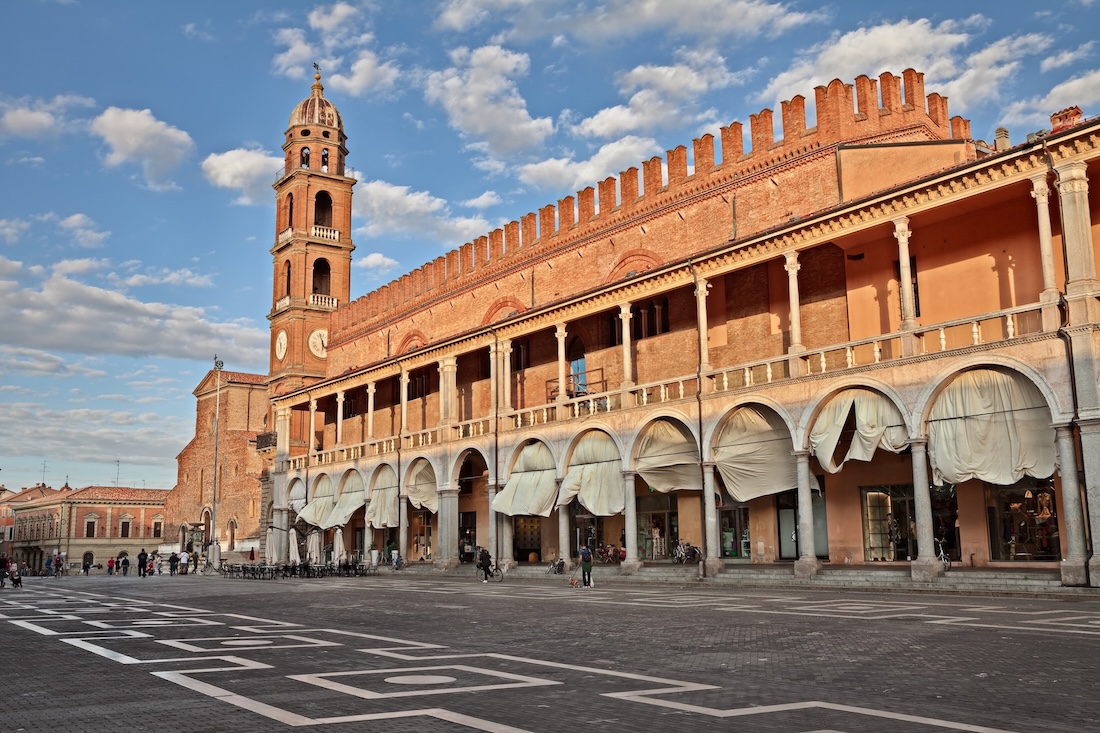
etailed brickwork and arches of historic buildings in Faenza, Emilia-Romagna

05 May Beyond the Guidebooks: 5 Italian Towns Worth Discovering

Five Italian towns you may not have heard of!

One of the great pleasures of travel—especially in Italy—is stumbling upon places you didn’t expect. While iconic cities like Rome, Florence, and Venice are celebrated for their grandeur, there’s a world of quiet, charming Italian towns waiting just off the beaten path. These lesser-known spots offer a more relaxed, authentic experience, perfect for travellers looking to avoid the crowds.

Here are five of our favourite Italian towns—hidden gems that may not make the front cover of guidebooks but offer a richness and warmth that’s hard to find elsewhere. Some of these towns feature in our small group tours of Italy, while others are special places we’ve discovered over the years. Each offers something unique but shares that rare, unspoiled quality that makes travel truly memorable.

1. Cison di Valmarino (Veneto)

Nestled in the heart of the Prosecco Hills, Cison di Valmarino is a perfectly preserved village with deep roots stretching back to Roman times. Once a vital stop on the trade routes linking the Alps with the Venetian lagoon, this quiet town still whispers of its past.

  • Explore the ancient via dell’acqua—a water path lined with old mills and stone channels.
  • Marvel at Castelbrando, one of Europe’s largest castles, perched above the village.
  • Visit during Artigianato Vivo in August to experience the local craft festival.

Whether you’re exploring on your own or joining our Veneto tour in 2026, Cison di Valmarino is a hidden gem that rewards the curious traveller.

2. La Morra (Piemonte)

High on a hilltop in the Langhe, La Morra offers panoramic views of vineyard-covered hills, medieval towers, and rolling landscapes. This quiet town is a cornerstone of Piemonte’s winemaking heritage.

  • Sample world-class Barolo wines at charming local bars.
  • Stroll to the vibrant Cappella del Barolo, a whimsical contemporary chapel.
  • Enjoy regional cuisine in small, family-run trattorias.

La Morra is a highlight of many small group tours through northern Italy, offering culture and wine without the crowds.

3. Vieste (Puglia)

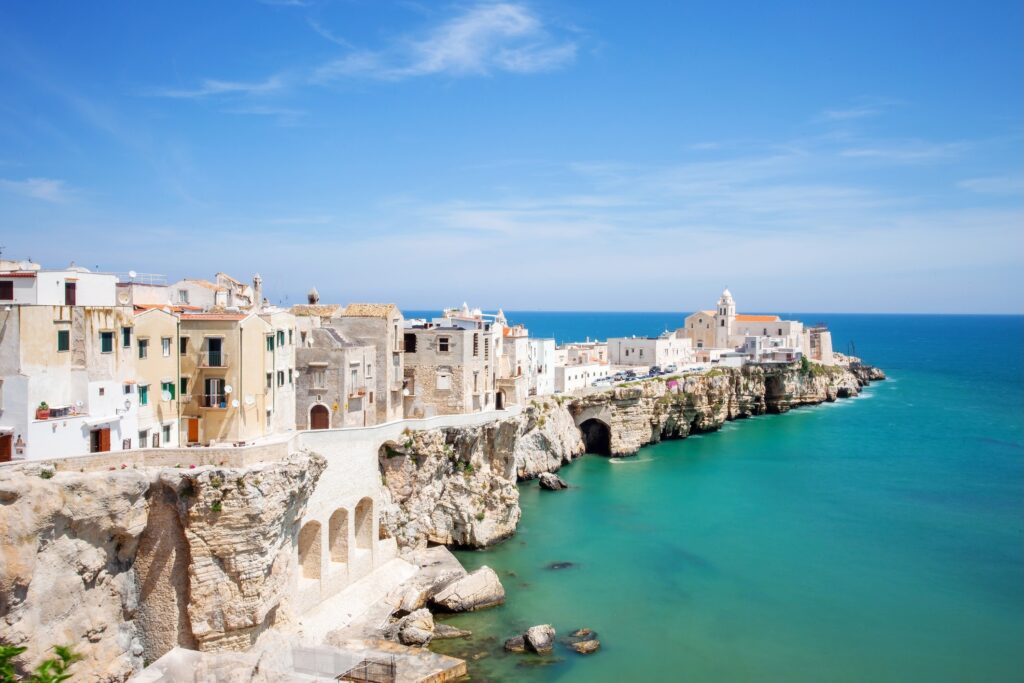
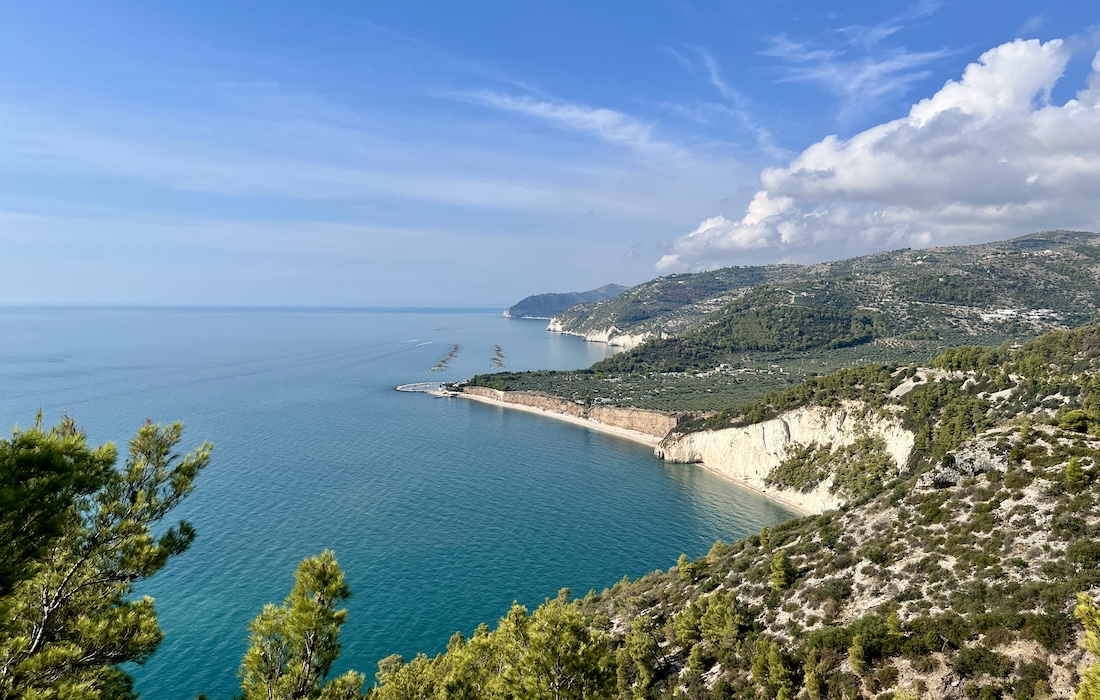
Perched on the dramatic Gargano PeninsulaVieste embodies the rugged charm of southern Italy. While much of Puglia’s tourism focuses on the Valle d’Itria or Salento, Vieste offers something different—wind-swept coastlines, whitewashed houses, and rich history.

  • Wander the narrow streets of the old town with its sea views and hidden staircases.
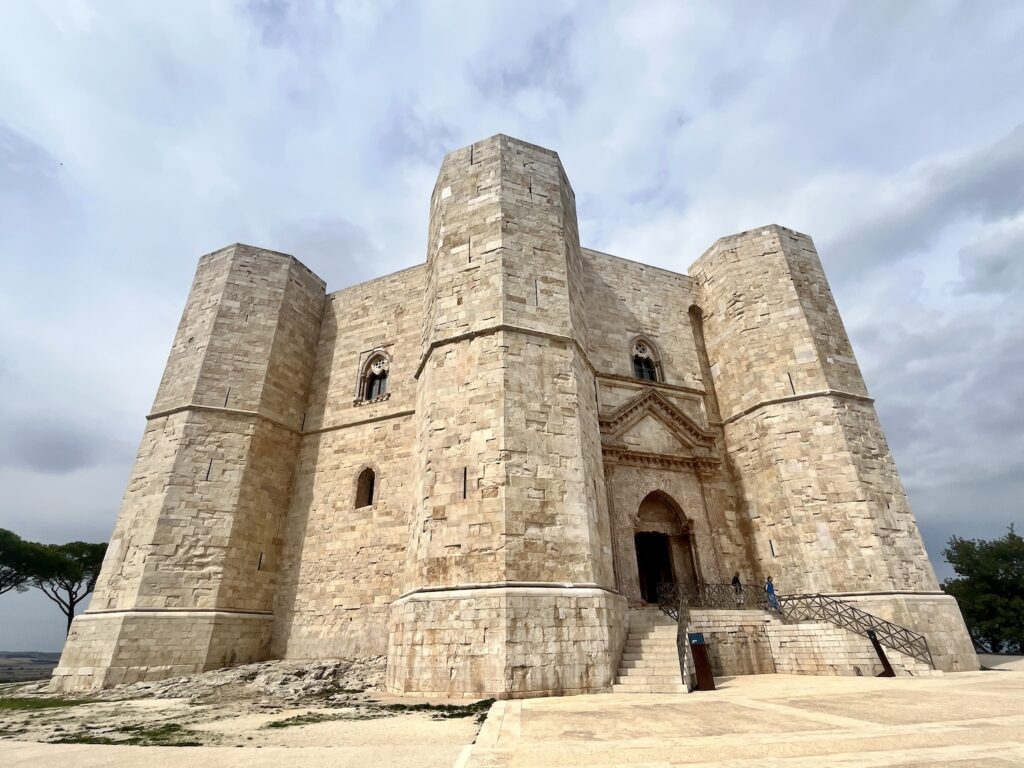
  • Discover Frederick II’s 13th-century castle, a reminder of Vieste’s storied past.
  • Relax on long sandy beaches or explore limestone sea caves by boat.

If you’re planning a Puglia tour, don’t miss Vieste for its unique blend of natural beauty and cultural heritage.

Charming fishing town of Vieste with panoramic sea views and rugged coastline

Italian Village of Vieste, Southern Italy

4. Glurns (Glorenza) (Trentino-Alto Adige)

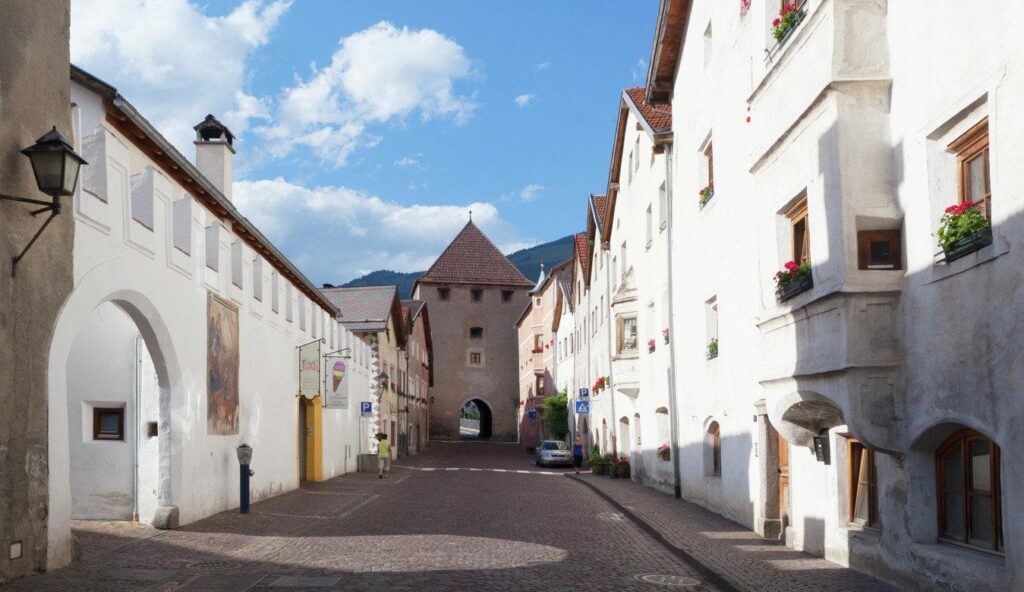
Tucked away near the Swiss border, Glurns is a perfectly preserved medieval town with intact walls, towers, and gates. Its small size belies its historical significance and refined charm.

  • Walk the entire perimeter of the town in under 30 minutes.
  • Explore artisan workshops and cobbled streets lined with arcaded houses.
  • Experience the cultural mix of South Tyrol in this storybook-like setting.

Glurns is an ideal stop on Dolomites tours, where history and nature intertwine beautifully.

Medieval street in Glurns, South Tyrol, with whitewashed houses and cobblestone paving

Medieval village of Glurns, South Tyrol

5. Faenza (Emilia-Romagna)

Known worldwide for its exquisite ceramics, Faenza offers a blend of culture, history, and down-to-earth sophistication.

  • Visit the International Museum of Ceramics, showcasing works from ancient Persia to Picasso.
  • Admire the elegant Piazza del Popolo and its graceful porticoes.
  • Discover local artisans and sample regional delicacies at traditional trattorias.

Faenza encapsulates the essence of Emilia-Romagna—a place where art, tradition, and hospitality come together seamlessly.


Why Discover Lesser-Known Italian Towns?

While famous cities have their allure, these smaller, often-overlooked towns offer a deeper, more personal connection to Italy’s rich tapestry. You’ll enjoy:

  • Authentic local culture without the crowds.
  • Unique architecture and centuries-old history.
  • Intimate encounters with food, wine, and artisan traditions.
  • A sense of discovery that makes travel truly unforgettable.


Join us on a small group tour of Italy

Our curated small group tours in Italy take you beyond the guidebooks to places like Puglia, the Dolomites, and the Veneto. Whether you’re after dramatic coastal views, alpine charm, or rolling vineyard landscapes, we have a tour that will reveal Italy’s hidden gems to you.

Explore our Tours


FAQs

Q: Are these towns included in your tours?

Some are featured in our itineraries, such as stops in the Veneto and Puglia regions. Others, like La Morra and Faenza, are places we love to recommend for independent travel.

Q: What’s the best way to visit these towns?

Joining a small group tour of Italy ensures you’ll have knowledgeable guides, seamless logistics, and access to local experiences. However, adventurous travellers can also explore independently by car or train.

Q: Are these towns accessible for senior travellers?

Yes! Our tours and suggested itineraries are designed with comfort and accessibility in mind, perfect for travellers 55+ who enjoy cultural exploration at a relaxed pace.

Each of these towns offers something special—whether it’s a grand view, a rich history, or a strong sense of local tradition. They may not be household names, but that’s part of their magic. In a country as layered and lived-in as Italy, the real treasures are often found just off the main road.

Read More

25 Feb The White Cities of Puglia: A Journey Through Italy’s Timeless Villages

Why Puglia’s White Cities Are So Special

Puglia, the sun-drenched heel of Italy’s boot, is a region known for its rugged coastline, ancient olive groves, and charming historic towns. Among its many treasures are the “white cities” – villages where lime-washed buildings reflect the Mediterranean sun, creating a strikingly beautiful landscape.

These whitewashed towns, perched on hilltops or nestled in the countryside, offer a glimpse into Puglia’s rich history and way of life. Wandering through their narrow alleys, you’ll find sun-drenched piazzas, historic churches, and traditional trattorias where life unfolds at a leisurely pace.

If you’re planning a Puglia tour in 2025, exploring these towns should be at the top of your list. Here’s why they shine—literally and figuratively!

Why Are Puglia’s Towns White?

The tradition of whitewashing buildings in Puglia has several possible origins:
– A Natural Cooling System: The bright white color reflects sunlight, helping to keep homes cool in the hot summers.
– Protection Against Disease: In towns like Ostuni, legend says that lime’s antibacterial properties helped prevent the spread of diseases like the 17th-century plague.
– Moisture Control: Limewash allows the walls to breathe, preventing damage from humidity.
– An Affordable Tradition: Lime was readily available and inexpensive, making it an easy and practical choice.
Whatever the reason, this age-old practice has shaped some of the most picturesque towns in all of Italy. Let’s take a journey through the most beautiful white cities of Puglia.

Ostuni – The Iconic White City

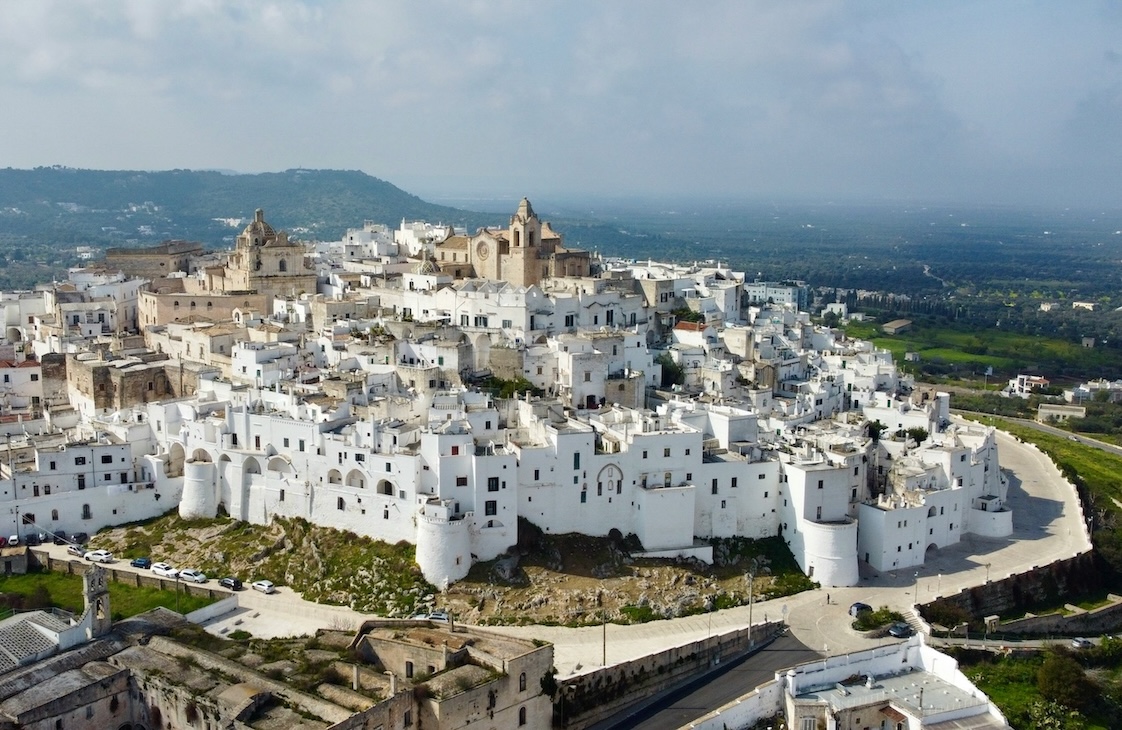
If you’ve seen pictures of Puglia’s white cities, chances are Ostuni was the star. Known as La Città Bianca (The White City), Ostuni sits high on a hill with stunning views over the Adriatic Sea and vast olive groves below.

What to See & Do in Ostuni
– Wander the Old Town: Get lost in the maze of narrow, whitewashed streets, charming courtyards, and hidden staircases.
– Visit the Cathedral: The Gothic-Romanesque Ostuni Cathedral is a masterpiece with an eye-catching rose window.
– Shop for Local Crafts: Browse boutiques selling handmade ceramics, woven baskets, and local delicacies.
– Enjoy an Aperitivo: As the sun sets, sip on a local Primitivo wine or Aperol Spritz in a picturesque piazza.

Locorotondo – A Perfectly Round Jewel

As its name suggests (loco rotondo means “round place”), Locorotondo is a town built in a perfect circle. It’s one of the most tranquil and elegant white towns in Puglia, known for its quiet charm and panoramic views over the Valle d’Itria.

Why Visit Locorotondo?
– Admire the Trulli: The surrounding countryside is dotted with trulli, Puglia’s famous cone-roofed houses.
– Sip Local White Wine: Locorotondo produces some of Puglia’s best crisp white wines.
– Stroll the Historic Centre: Peaceful, pedestrian-friendly, and full of hidden alleyways begging to be explored.
For those on a small group tour of Puglia, Locorotondo is an essential stop for its authentic atmosphere and timeless beauty.

Cisternino – A Culinary Hotspot

Smaller and less touristy than Ostuni or Locorotondo, Cisternino is a food lover’s paradise. Here, you’ll find an authentic slice of Puglian life, where locals gather in lively piazzas and butcher shops double as restaurants!

What Makes Cisternino Special?
– Fornelli Pronti: Visit one of the traditional butcher shops where you can choose your meat, have it grilled on the spot, and enjoy it with local wine.
– Relaxed Atmosphere: This is one of Puglia’s best-kept secrets, where time seems to stand still.
– Charming Streets: Like other white towns, Cisternino is full of tiny alleys, whitewashed houses, and blooming balconies.
For those who want to experience Puglia’s food culture in the most authentic way, Cisternino is a must-visit.

Martina Franca – Baroque Beauty in a Whitewashed World

Unlike the other white towns, Martina Franca stands out for its Baroque palaces and grand churches nestled among its white facades.

What to See in Martina Franca
– Basilica di San Martino: One of the most impressive Baroque churches in Puglia.
– Elaborate Wooden Doors: Martina Franca is famous for its handcrafted wooden doors and intricate stone frames.
– Opera Festival: Every summer, the town hosts the Festival della Valle d’Itria, a prestigious opera festival that draws music lovers from all over Italy.

If you love history, architecture, and culture, Martina Franca is the perfect stop on your Puglia tour.

How to Experience the White Cities Like a Local

– Go in Spring or Autumn: Avoid the peak summer crowds and enjoy mild weather and a relaxed pace.
– Take Your Time: These towns are made for aimless wandering, leisurely meals, and quiet discoveries.
– Enjoy the Food: Try handmade orecchiette pasta, fresh seafood, and Puglia’s incredible cheeses and wines.
– Drive or join a small group tour: Public transport in the Valle d’Itria can be unreliable. A small group tour lets you experience Puglia hassle-free, with expert guides bringing the region’s history to life.

Join our Small Group Puglia Tour this year.

If you’ve ever dreamed of experiencing Puglia’s white cities, now is the perfect time to plan your trip. We are offering four small group tours to Puglia from Australia – with departures in April, May, September and October.
Travel with a small group of like-minded explorers, enjoy exclusive local experiences, and immerse yourself in the charm of Italy’s most beautiful whitewashed villages.

Find out more. 


Read More
Puglia summer coastal view

12 Oct Best Time to Visit Puglia: A Seasonal Guide for Australian Travellers

Puglia by Season: What to Expect Throughout the Year

If you’re planning a trip to southern Italy and wondering about the best time to visit Puglia, the answer depends on the kind of experience you’re hoping for. This sun-washed region can be visited year-round, but for many Australian travellers, the most comfortable and rewarding months are April, May, September and October. During these shoulder seasons, the weather is warm without being oppressive, the countryside is at its most vibrant, and towns and coastal villages feel lively without being crowded.

For travellers considering a small group tour of Puglia in spring or autumn, these months offer the most comfortable conditions for exploring towns, countryside and coastline.

Puglia in Spring: April and May

Spring is widely considered one of the best times to visit Puglia. In April, the countryside is fresh and green after winter rains, with wildflowers scattered through olive groves and along country roads. Daytime temperatures typically range between 15°C and 20°C, warming towards the end of the month. It’s an ideal time for walking through historic towns such as Lecce and Ostuni, exploring rural masserie, and enjoying long lunches outdoors without the intensity of summer heat.

May builds gently on this. Temperatures generally sit between 18°C and 24°C, the days are longer, and the region feels open and relaxed before the high season begins. Markets are at their best, with artichokes, broad beans, cherries and early summer produce appearing on menus. For travellers who want comfortable sightseeing weather and a lively but unhurried atmosphere, May is particularly rewarding.

Puglia in Summer: Late June to August

Summer in Puglia brings clear skies, warm seas and a vibrant coastal energy. From late June through July and August, temperatures frequently exceed 30°C, and in inland areas they can climb higher. This is the peak holiday season for Italians, especially in August, when beaches and seaside towns are at their busiest.

If your focus is swimming, relaxing by the sea, and enjoying long evenings outdoors, summer can be appealing. However, for visitors who plan to spend full days exploring towns, archaeological sites or countryside villages, the heat can feel demanding. Sightseeing is often best done early in the morning or later in the afternoon.

Puglia in Autumn: September and October

For many travellers, September is one of the most balanced months to visit Puglia. Daytime temperatures generally range from 20°C to 27°C, the sea remains warm from the summer months, and the intense August crowds have eased. Vineyards and olive groves are active with harvest preparations, giving the countryside a sense of quiet industry.

October brings slightly cooler conditions, typically between 17°C and 23°C, and a softer light across the landscape. The pace slows, restaurants and towns feel more local again, and walking through historic centres becomes comfortable and unhurried. For those interested in food, wine and a deeper cultural experience, early autumn is often an excellent choice.

Puglia in the autumn

Puglia in Winter: November – March

Winter in Puglia is quiet and local. From November through March, visitor numbers drop significantly, particularly in coastal towns. Daytime temperatures generally range between 5°C and 15°C, and while snow is rare, the weather can feel damp and variable.

This period is not suited to beach holidays, and some seaside restaurants, hotels and seasonal attractions close for the winter. However, historic centres such as Lecce, Bari and Martina Franca remain active year-round. For travellers interested in architecture, local cuisine and a slower rhythm of life, winter can offer a more intimate glimpse of everyday Pugliese life, often at lower accommodation rates.

For most first-time visitors travelling from Australia, however, spring and early autumn tend to provide a more comfortable balance of weather and activity.

Why April, May, September and October Stand Out

While every season has its appeal, April, May, September and October consistently offer the most balanced conditions for exploring Puglia. Temperatures are warm but manageable, towns feel lively without being overwhelmed, and the countryside is either fresh with spring growth or glowing in early autumn light.

These months are particularly well suited to travellers who want to walk through historic centres, visit olive groves and vineyards, enjoy long lunches outdoors and experience local food traditions without the intensity of peak summer heat. The pace is relaxed, but the region is fully open and welcoming.

These are also the months we choose for our 2026 Puglia tour, allowing guests to explore at a relaxed pace without the intensity of peak summer heat.

Visiting Puglia on a Small Group Tour

If you’re considering visiting Puglia as part of an organised journey, timing becomes even more important. We run our small group tour of Puglia during the most comfortable months of spring and autumn, when the weather allows for unhurried sightseeing and the region is at its most enjoyable.

Our carefully designed itinerary balances cultural visits, regional food experiences and time to explore independently, all at a pace suited to mature travellers coming from Australia.

You can read the full itinerary and departure details for our 2026 Puglia tour here.

Frequently Asked Questions About the Best Time to Visit Puglia

Is April a good time to visit Puglia?
Yes, April is one of the most pleasant months to visit Puglia. The countryside is green after winter, wildflowers are in bloom, and daytime temperatures usually range between 15°C and 20°C. It’s comfortable for walking through historic towns and exploring rural areas without the heat of summer.

Is Puglia too hot in summer?
July and August can be very hot, particularly inland, with temperatures often exceeding 30°C and occasionally reaching the mid-30s. Coastal areas benefit from sea breezes, but sightseeing in the middle of the day can feel demanding. Summer suits travellers focused on beach time and swimming rather than extended walking.

When is the sea warm enough to swim in Puglia?
The sea begins to warm up from late May and is generally very pleasant from June through September, often remaining comfortable into early October. Travellers from Australia, who are accustomed to cooler ocean temperatures, often find swimming quite manageable in May, and some are happy to take a dip even in April on a warm day. By September, the water has retained the summer heat and is typically at its most inviting.

Is October too late to visit Puglia?
Not at all. October remains mild, with temperatures generally between 17°C and 23°C. The crowds are thinner, the light is softer, and it’s an excellent month for food-focused travel, particularly during the olive harvest season.

What is the best time to visit Puglia for an escorted tour?
For most travellers coming from Australia, April, May, September and October offer the best balance of comfortable weather, open attractions and a relaxed atmosphere. These months allow for unhurried exploration of historic towns, countryside landscapes and regional food traditions.

Read More

05 Jan Five Hidden Gems of the Veneto

The Veneto boasts some of Italy’s most popular tourist attractions, like Venice and Verona, but it also contains hidden gems that are often overlooked and underestimated. You can discover these treasures that lie off the usual tourist path, even in popular destinations. Whether it’s the tranquil trattorias and the serene lagoon at Torcello in Venice or the symmetrical and breathtaking Giardino Giusti in Verona, there’s something to captivate everyone.

Here are five lesser-known places you should consider if you visit this extraordinary corner of Italy. We include each location on our The Lands of the Serenissima tour of the Veneto in June this year.


1. The Scrovegni Chapel: A Frescoed Masterpiece

Padova’s Scrovegni Chapel is an artistic jewel housing a series of breathtaking frescoes by Giotto. The chapel was consecrated in 1305 and is renowned for its narrative cycle depicting the lives of the Virgin Mary and Christ. The artist’s masterful use of perspective and emotional depth was celebrated at the time; it revolutionised art and influenced the newly emerging style, which would later be known as the Renaissance. The meticulous preservation of the chapel and its enormous cultural significance make it a must-visit location. Even for those less excited about art, the experience of being part of a small group walking into this space where vivid colours surround you is spellbinding.

2. Prosecco Hills: A Toast to Tranquility

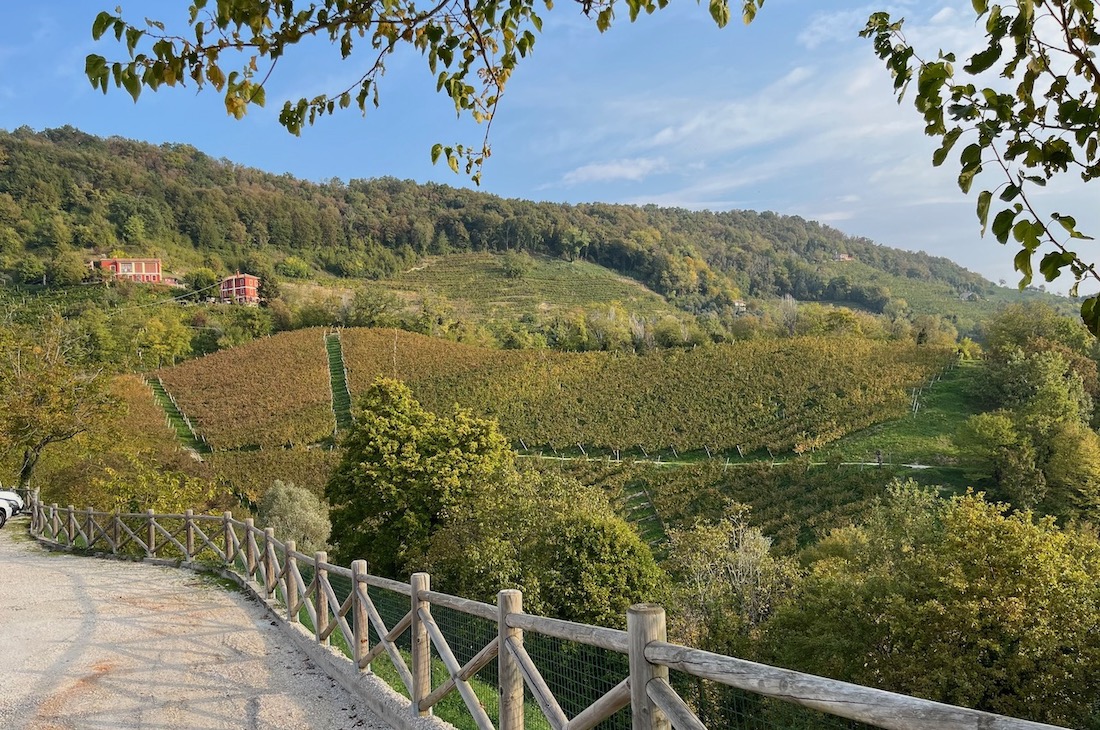
The Prosecco Hills is a stunning landscape of soft green contours in the foothills of the Dolomites. Part of the area features the vine-covered slopes that make its much-appreciated wine. But it’s also an area for cultivating chestnuts, corn and cheese. It has castles, abbeys, and hilltop churches with impressive views and thousands of years of history. At Follina, the Abbey is a quiet witness to the passing years. The Molinetto della Croda, a nearby watermill, was built in the 1700s. Not far off, the Pieve di San Pietro, a historic church, adds its presence to the unmistakable charm of the surroundings. In the Prosecco Hills, the muted atmosphere lets the heritage of the land speak for itself.

3. Marostica: Living Chess and Medieval Charms

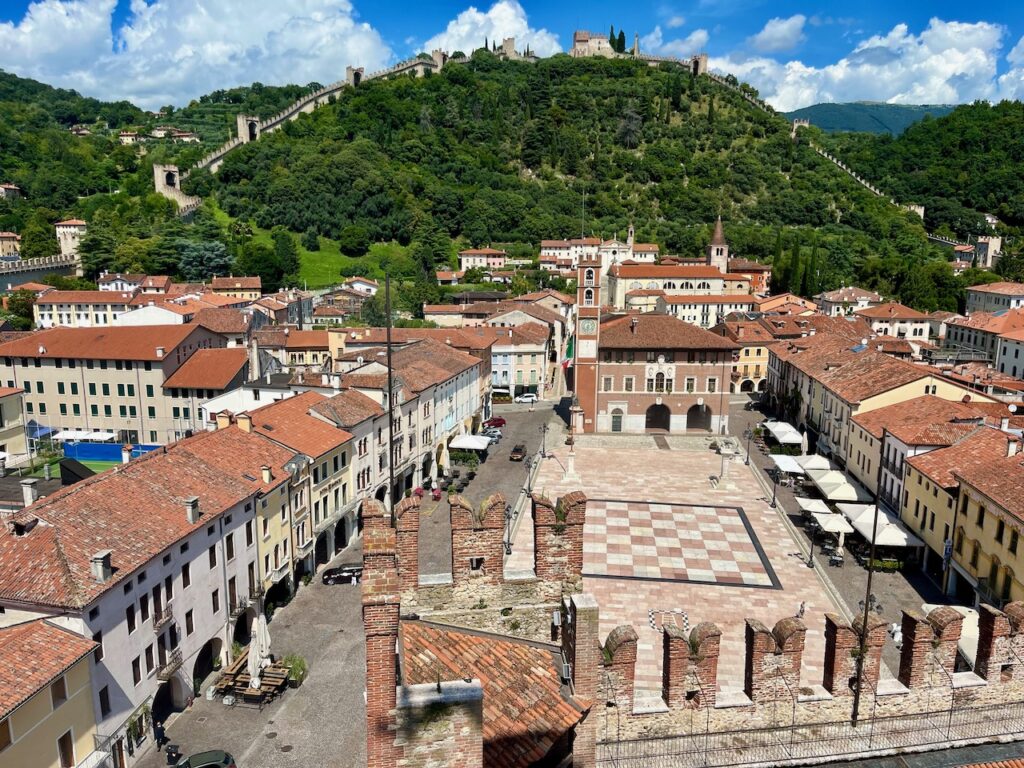
Marostica is a small town with a charming medieval feel. It is famous for its twice-a-year chess game, which takes place on a giant chessboard in the town square and is played with live actors in pageant costumes. The town has meandering cobblestone streets and mediaeval walls watched over by the Lower and Upper Castles. It is not on the regular tourist trail, and the atmosphere resembles a typical provincial town, albeit with impressive attractions.

4. Cittadella: A Fortress Frozen in Time

Cittadella is a small walled city. It was built in the 13th century, and its walls remain largely intact, making it a fascinating spot to visit. You can walk along the walls and explore the city’s many towers, gates and other architectural features. The town also boasts several beautiful churches, museums and galleries, and restaurants and cafes serving local cuisine. Cittadella is a charming and picturesque town that offers a glimpse into medieval Italian life.

5. Vicenza: Palladian Elegance

Vicenza holds a remarkable collection of architectural wonders and a deep cultural heritage. The city is an ideal destination for architecture enthusiasts, who can marvel at the Palladian Basilica and the Teatro Olimpico, among other notable landmarks. The charming streets offer plenty of opportunities to take a leisurely stroll and soak up the local atmosphere. Surrounding the city is the natural beauty of the Berici Hills, which is perfect for outdoor activities.

Discover these hidden gems and others on our Veneto tour,  Lands of the Serenissima, which aims to reveal Veneto’s unique secrets by including a mixture of culture, scenery, food, personal time and fun.

Read More

13 Oct Uncover the authentic charm of Italy on a small group tour

Are you dreaming of a trip to Italy?

With its rich history, culture, and gastronomy, Italy has something to offer everyone. However, while some people enjoy planning their trips months in advance, others find the minutiae of planning overwhelming.  

Our small group tours allow you to immerse yourself in the authentic charm of bella Italia, while someone else makes sure everything runs smoothly. Our itineraries are carefully crafted by Luca and Philippa, who personally plan every aspect of the journey. Come along and explore the magic of Italy in a way that’s both intimate and enriching.

What is it that makes our tours so unique? 

Carefully planned Itineraries

Our tours are meticulously designed to provide you with an authentic Italian experience. We’ve scoured the country to curate the perfect blend of history, art, culture, and gastronomy.

Small groups

Our small groups of no more than 12 adventurers ensure a personalised and intimate experience. You’ll create meaningful connections with your fellow travellers, your tour leader and the locals you meet along the way. 

Slow-paced exploration

We believe in savouring every moment. With a minimum of 3 nights in each location, you’ll spend less time packing and unpacking and more time exploring at your own pace. 

Expert Italian tour leaders

Our passionate tour leaders are dedicated to introducing you to Italy’s hidden gems. Their intimate knowledge of the country helps unlock unique experiences that aren’t accessible to all travellers.

Culinary delights

We love introducing our clients to the regional specialities that make eating in Italy so interesting. Most of our meals are à la carte, allowing you to relish the rich flavours of the regional cuisine and enjoy exceptional local wines.

A great time 

Our tours are not only about exploring Italy’s hidden gems but also about having a great time. We don’t take ourselves too seriously, and we believe it’s important to enjoy every moment, laugh and create some wonderful memories. 

Read More

14 Aug A POSTCARD FROM OTRANTO, PUGLIA

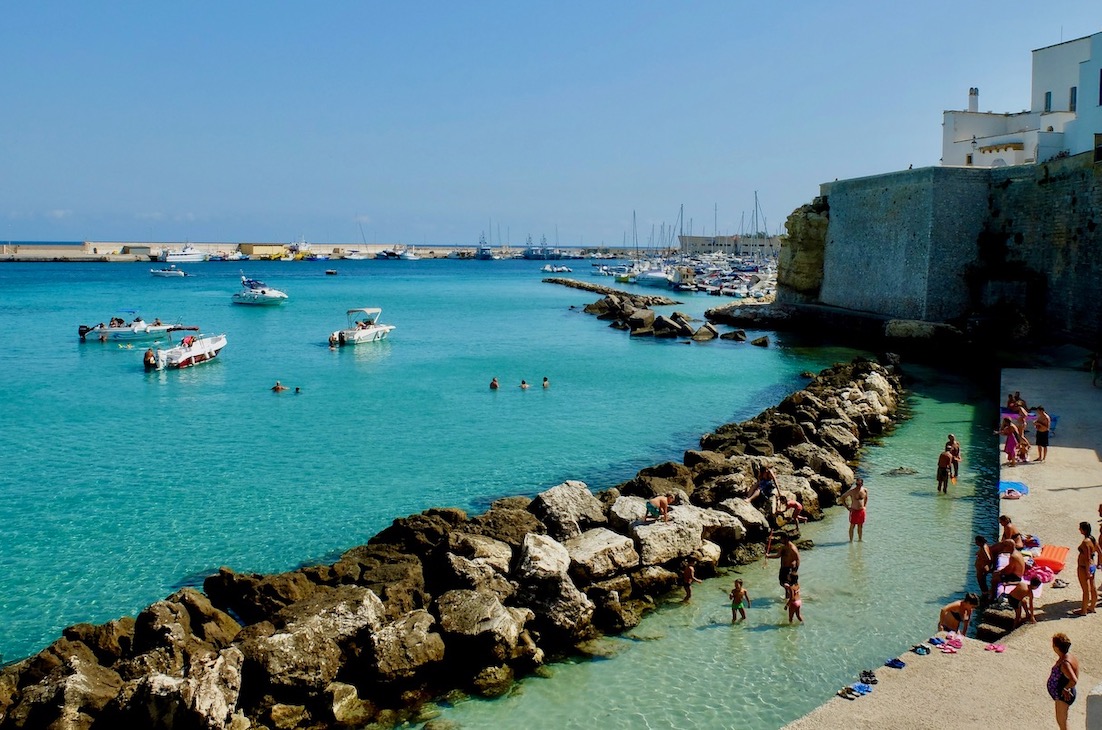
The walled port city of Otranto in Puglia is Italy’s most eastern town. On a clear day, if you gaze out from the city’s walls across the Adriatic, you can make out the coast of Albania and the mountain ranges of Mount Çika. Just as mesmerising is the view from Otranto’s walls of the crystal clear turquoise waters. The town’s outlook, its history, and charming nature make it well worth visiting. 

Founded by the Messapians, the town has a history of occupation that includes the Greeks, the Romans and the Normans. One of its most colourful periods was in the 11th century when it became a leading Crusader port. 

It is also remembered for a more macabre chapter when, in 1480, the Ottomans invaded and looted the citadel. Legend has it that they sacked the city, killing twelve thousand people, and then went on to massacre the eight hundred survivors who had sought refuge in the cathedral and refused to renounce their Christianity. Historians disagree on the story’s veracity, but it was good enough for the church. Pope Clementine XIV beatified the eight hundred martyrs in 1771, and they were canonised by Pope Francis in 2013. 

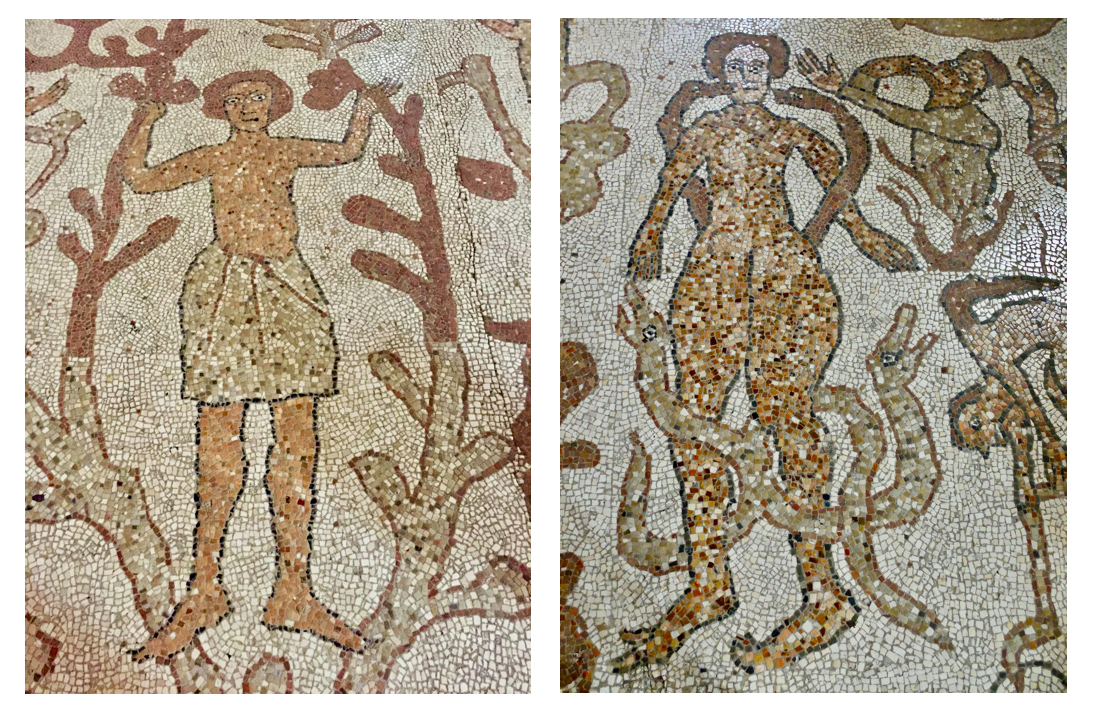
The most fascinating aspect of the city is the cathedral, whose architecture reflects the 11th-century Norman influence as opposed to the Baroque architecture prevalent elsewhere in Puglia. The highlight is the medieval mosaic floor, one of Italy’s most mysterious and impressive mosaics.

A priest, Pantaleone, carried out the work in 1165, employing a ‘primitive’ style that art critics compare with the Bayeux Tapestry. Scholars continue to debate the significance and inspiration of its allegorical images, which include Adam and Eve, King Solomon, Alexander the Great and King Arthur. 

The mosaic’s centrepiece represents three giant Trees of Life, a common motif in early Christian and Islamic art. Amongst the branches of the trees, you will see scriptural scenes, animals, symbols of the months and other fantastical images. It truly is quite remarkable!

The church also contains the macabre Chapel of the Martyrs, where eight hundred skulls are preserved and mounted on the walls. 

Don’t miss Otranto on your journeys around the Salento region of Puglia! If you want to come with us, we will visit it on our Puglia – A Road Less Travelled Tour in May and September 2024. 


Read More
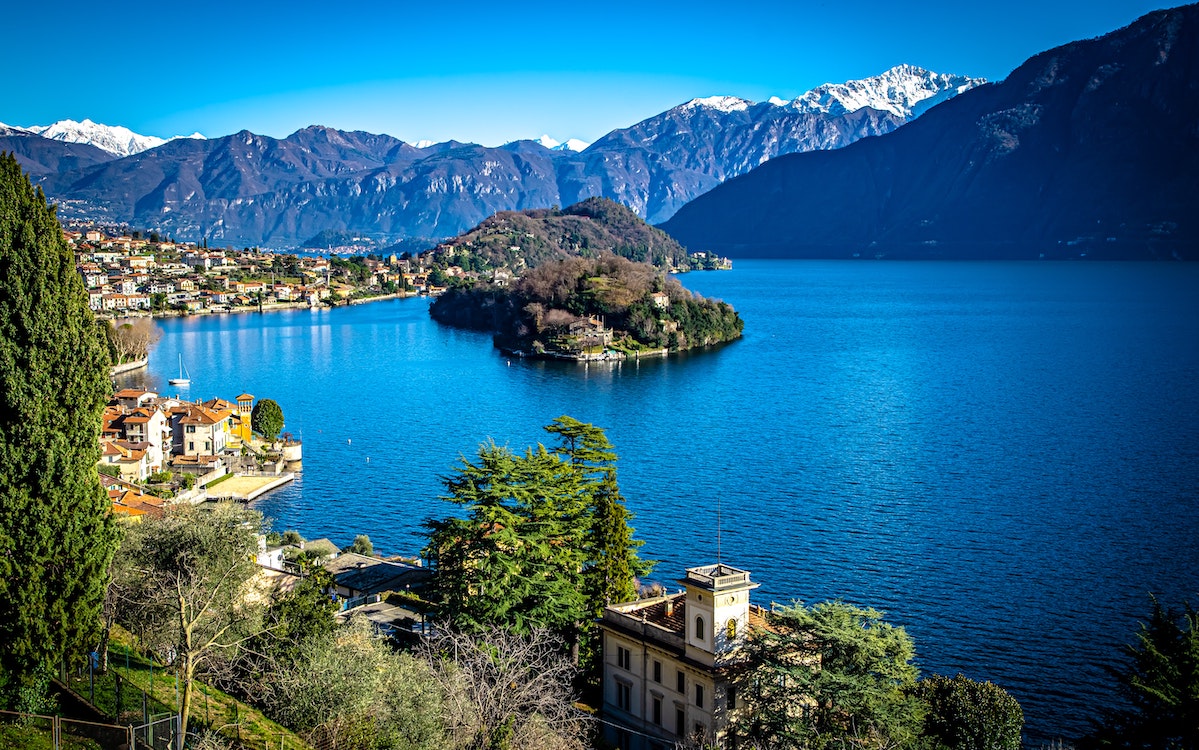
Lake Como Scenery

01 Jun FIVE INTERESTING FACTS ABOUT LAKE COMO

Lake Como is rightly one of the most popular summer destinations in northern Italy and lots of people know the lake for its beautiful scenery and elegant villas. But there is more to Lake Como than meets the eye.

1. Lake Como is one of the deepest lakes in Italy. 

It’s the depth that gives the waters their vivid blue colour that makes for such spectacular vistas! At its deepest points, the waters of Lake Como are more than 425 metres deep. Australia’s deepest lake, by comparison, is Lake St Clair in Tasmania, which is about 200 metres deep.

I’m also guessing that’s why the waters of Lake Como are so cold!

2. The town of Como was an important centre in Roman times. 

The Romans built the Via Regina along the lake’s western shore. This placed Como in a vital position on the major trading route between the Po valley on the Italian peninsula and the Rhine Valley in what is now Switzerland. The lake’s popularity as a summer resort also started in Roman times, with wealthy Romans recognizing the beauty of the area and beginning to build villas on the lakeshore.

3. Lake Como supposedly has its very own lake monster, Lario! 

The first reported “sighting” was in 1946 when a large reptile-like creature was spotted swimming in the lake. It was named Lariosauro, after the prehistoric reptile whose fossilized remains were found near Lake Como (Lariosaurus balsami). 

There have only been a handful of sightings over the years, so it must be very shy!

Main image (above) by Bruce Meier on Unsplash

Photo by Lewis J Goetz on Unsplash

4. Lake Como is the capital of Italy’s silk production.

No one knows precisely how silkworms first came to Italy, but one fascinating account has two priests smuggling them out of China in the 6th Century!
It wasn’t until the 15th Century that silk production in the Como area really commenced. Ludovico Sforza, the Duke of Milan, ordered the planting of mulberry trees on the shores of Lake Como. This led to the dramatic expansion of the silk industry, as fascinatingly, silkworms can eat anything but will only produce silk when they are eating mulberry leaves.
The establishment of a prestigious school for silk artisans in the 19th Century cemented Como’s industry dominance. The school still operates today and trains some of the world’s most talented silk masters.

5. Como played a role in closing a dark chapter in Italy’s history. 

In 1945, Italian partisan forces captured a party of retreating fascist officials who were fleeing north towards Switzerland. Amongst them were Mussolini and his lover Petacci. They were summarily tried and executed on the shores of the lake at Giulino di Mezzegra, thus ending a sad chapter in Italian history.
When we stayed in Lenno in 2013 after our wedding, we were walking in the hills behind Lenno and stumbled across the site, commemorated by a small plaque on the gate of a private house. It was pretty chilling.

Are you planning a trip to Lake Como? 

We can help with recommendations for hotels, restaurants and things to do, even where to buy Como’s famous silk. Just get in touch, and we can put together a custom itinerary for you.
If you’d like to join one of the tours that visit Lake Como, it’s not too late to join our Milan and the Lakes tour in 2022 or start planning for one of our 2023 tours.

Read More

12 Aug WHO WAS AUGUSTUS AND WHY IS AUGUST CALLED AUGUST?

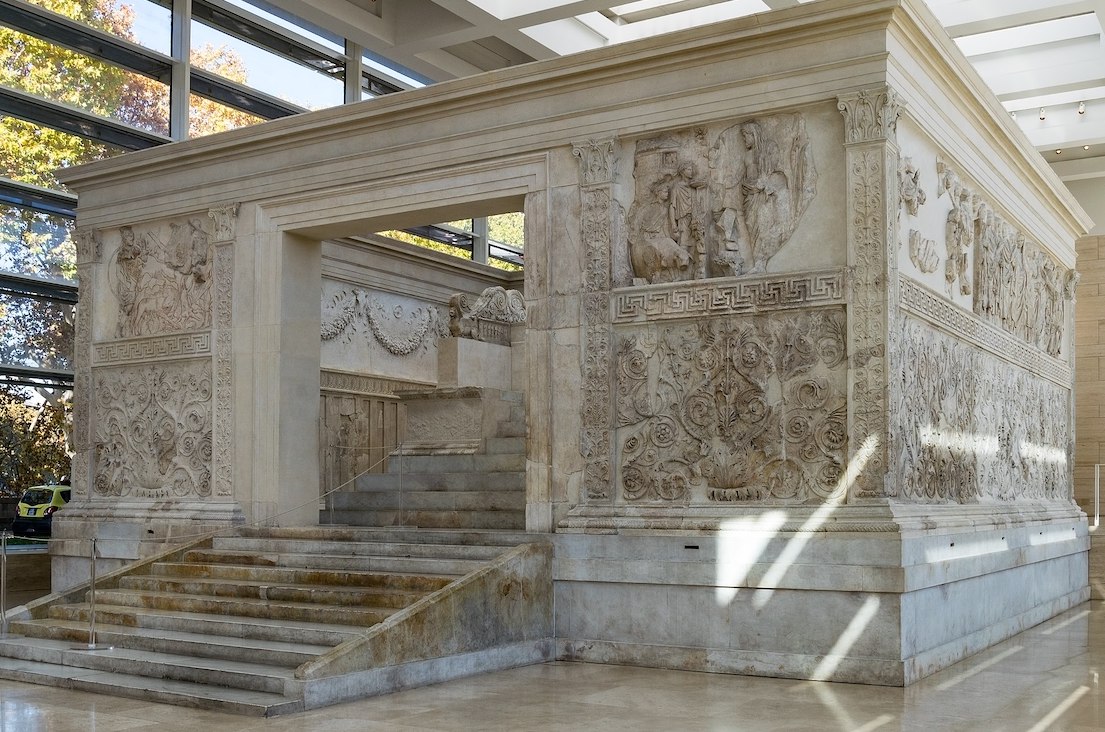
Image of the Ara Pacis (above)  by Rabax63, CC BY-SA 4.0 via Wikimedia Commons

Since 1582 our daily lives have been regulated by the Gregorian calendar, a solar dating system that counts our lives in days, months and years. The origin of this calendar goes back much further than this, to ancient Roman times, when society operated under a ten month system. Some months such as marzo were named after gods, while others were simply numbers.  

August was originally known as sextilla, the sixth. But in 8BCE the emperor Augustus renamed the month after himself. As you do!!

So who was Augustus and what is his story?

Augustus was a noble Roman, born Gaius Octavian, and adoSpted by his great uncle, Julius Caesar. As a result he changed his name to Gaius Julius Caesar. 

Adoption of heirs was common among upper class families in ancient Rome. Romans were very concerned about succession and family legacy and if there was no male heir, it was a common practice to adopt young male family members so that the family name, assets and status could survive. 

Julius Caesar intended his adopted son to inherit the leadership but fate intervened.  Acting in response to Caesar’s autocratic approach and penchant for radical change, and indeed fearful that he would appoint himself king of Rome, a dissident group of senators carried out the now notorious assassination of their leader, scuttling Gaius’ chances of inheriting the leadership role. In response Gaius joined forces with Mark Antony to fight and defeat Caesar’s assassins in a bloody civil war. 

The senate accepted that Rome would thrive under the leadership of Augustus as a single ruler. He was given the title Augustus, meaning the venerable one. His appointment was consecrated by the auguri , a religious group of mystics whose role was to observe  and interpret the signs (usually the behaviour of birds) to determine the approval of the gods for any proposed action. This meant that not only was he emperor, but he was also the head priest, and a god.

In English august means a respected, impressive, magnificent, honourable, exalted type of person. So what was so impressive about the emperor Augustus?

Who was Augustus

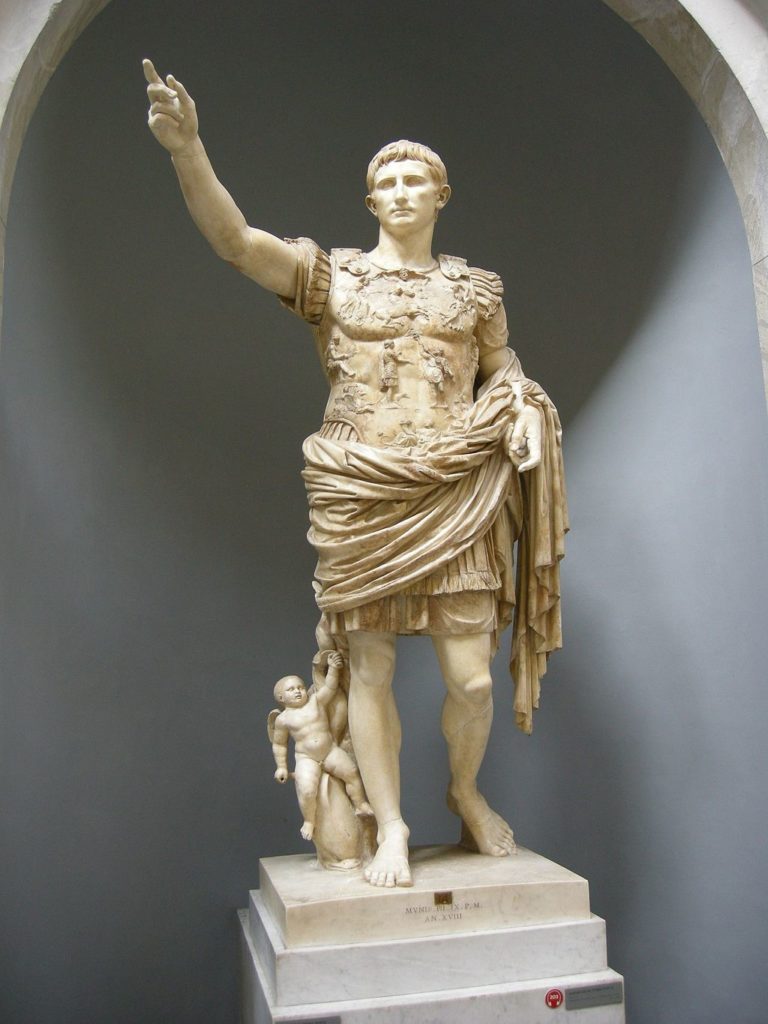
Statue of Augustus from the Villa of Livia near Rome
Image by Sailko, CC BY-SA 3.0 and found on Wikimedia Commons

Augustus was first and foremost an astute politician. He had clearly observed and learned from the downfall of his adoptive father Julius Caesar and set out to promote improvement of the status quo without forcing radical change. 

His program of improving existing systems of civic government and management resulted in marked improvements to the daily lives of Romans. 

He introduced the concept of vigili  with the Vigiles Urbani, literally the Watchmen of the City. They were the first urban police and fire fighting forces, and interestingly their name lives on in the vigili urbani, the town police, and the vigili del fuoco, the firefighters in Italy today.

He established the cursus publicus, Rome’s first postal and official transportation service, which conveyed messages, officials and tax revenue between the provinces and Rome.  The system involved teams of animals, wagons and drivers moving along routes that connected the various parts of the empire, requisitioning facilities from local communities as they went. 

As a clever politician Augustus was also aware of the power politics underlying the gladiatorial games. Under Julius Caesar’s rule, the spending on gladiatorial games had become exorbitant as the elite vied with each other to sponsor more and more extravagant events in order to win prestige and political power. Augustus stepped in to curb this excess, placing limits on both private and public spending and tying the games to the state sponsored imperial religious cult, which of course further strengthened public recognition of the his own position. 

Augustus was also interested in the fine arts, and state sponsored artists, writers and philosophers joined the ranks of those surrounding him. He appointed an advisor called Clinio Mecenate whose role was to introduce the best of these people into this circle; and we can thank Mecenate for ‘discovering’ the likes of Horace and Virgil!  On top of his interest in the arts, he also completed a massive programme of civic works including the Ara Pacis, the Temple fo Caesar, the Forum of Augustus and the Baths of Agrippa. 

Although Augustus was a politician rather than an active fighter, the Roman Empire doubled during his reign. Whether you regard him as the first of the ‘strong men’ or as a model for subsequent politicians, there’s no doubting his achievements. ‘I found Rome a city of bricks and left it a city of marble,’ he said. Under Augustus, Rome saw the end of a republic and the beginning of an empire, the end of internal warring and the onset of a long period of social stability and peace, known as the pax romana. 

Read More